
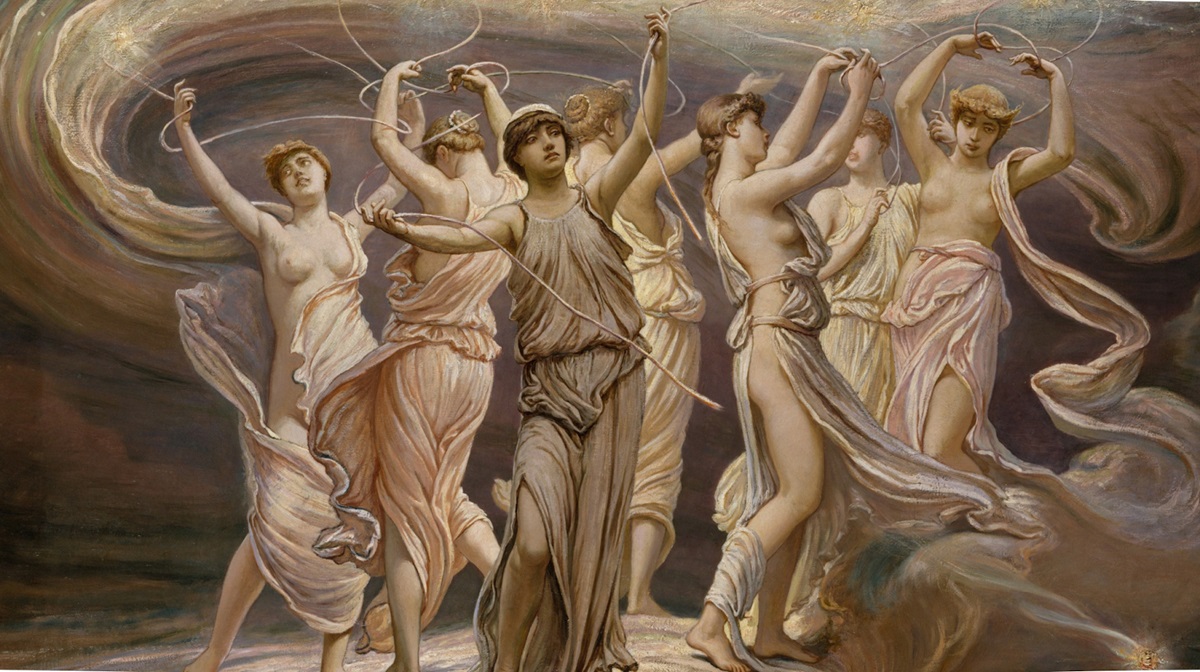
Ancient Greek religion wasn’t a theme or a neat system you could summarize in a paragraph. For the Greeks, it was daily life: prayers at the hearth, festivals in the city, and a constant sense that the world around you had personalities watching back. That’s also why Greek gods refuse to stay in the past and why places like Slots of Vegas Casino still lean on them as familiar, instantly readable symbols. Designers keep borrowing their faces for everything from movies to the occasional mythology-themed slot.
Ancient Greek religion did not run on a single holy book or one official church. It was more like a shared set of habits and stories that changed a little from place to place. One city poured its pride into Athena, another into Apollo, another into Poseidon. Families had their own domestic rites. People did not separate “religion” from the rest of life the way we often do now; it sat inside politics, farming, marriage, travel, and death.
A lot of what we know comes through literature rather than a formal creed. Hesiod’s Theogony and Works and Days lay out the divine family drama; Homer’s Iliad and Odyssey show the gods interfering in human problems with almost casual confidence. None of these texts reads like a calm sermon. They read like stories told by someone who has seen how messy the world can be.
Where the world begins: Chaos, earth, and the first gods
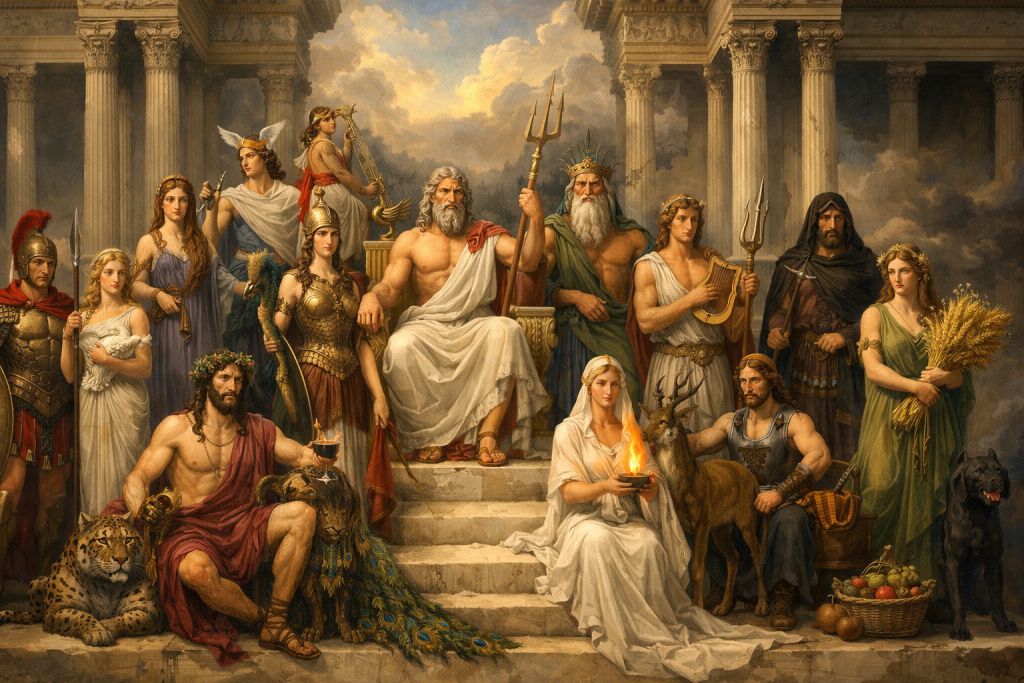
One common Greek starting point is Chaos: not “chaos” as in noise, but a vast, dark nothing. Out of that void appear the first beings. Gaia is the Earth. Tartarus is a deep, bleak abyss beneath it. Uranus is the Sky stretched over everything. Eros arrives too, not as a cute detail but as the force that makes creation possible.
Gaia and Uranus produce early monsters and giants, including the hundred-handed giants (Cottus, Briareus, and Gyges). Then come the Titans, an older generation of gods. In the myth’s logic, nature is literally family. Rivers, seas, the Sun and Moon, dawn and stars, the seasons, and even the four winds (Boreas from the north, Notus from the south, Zephyrus from the west, Eurus from the east) are born from divine unions. It is a strange idea on purpose: the world is alive, related, and not entirely under human control.
The Olympians: power, paranoia, and a ten-year war
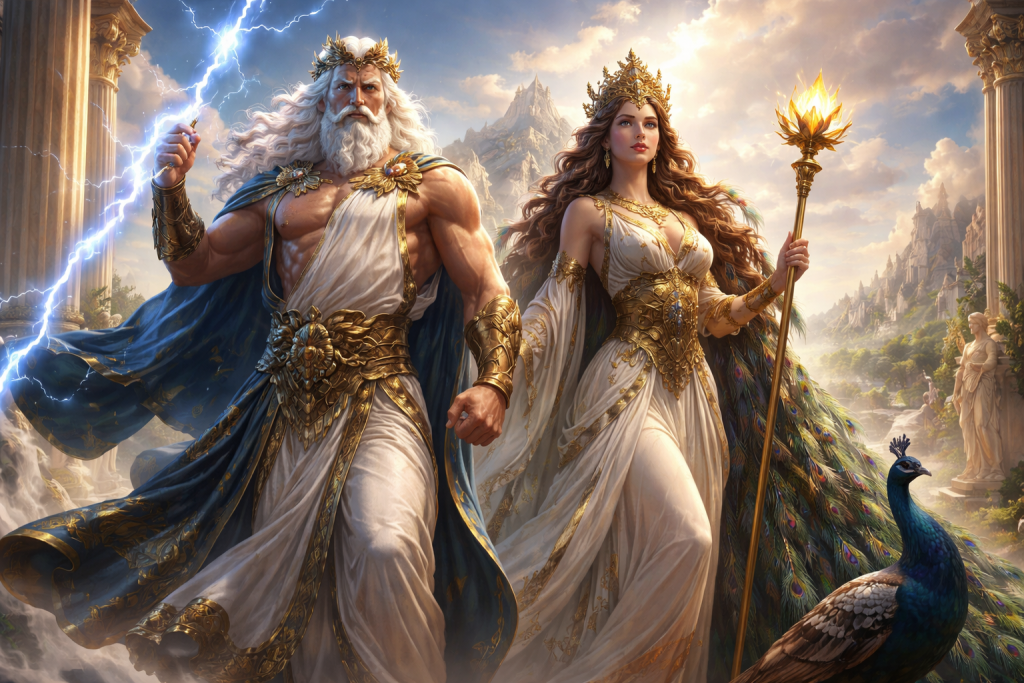
The better-known gods are the Olympians, the younger generation who take over after the Titans. Cronus and Rhea have children who become the core of that new order: Hestia, Demeter, Hera, Hades, Poseidon, and Zeus.
Cronus is not exactly a relaxed father. He fears one of his children will overthrow him, so he swallows them as they are born. Rhea manages to save the youngest, Zeus, by giving Cronus a stone wrapped like a baby. Zeus grows up hidden on Crete, raised by nymphs (Adrasteia and Ida in some versions), fed by the divine cow Amalthea, and guarded by the Curetes, who make noise to keep his cries from giving him away.
When Zeus is old enough, he comes back and challenges Cronus. The war between the Olympians and the Titans lasts ten years. It is not a quick “good wins” moment. It is a grind. And when Zeus finally wins, he does not erase the past so much as pin it down and claim a new kind of order.
Zeus becomes king of the gods, lord of thunder and sky. He can be majestic, petty, generous, terrifying, and (to put it kindly) romantically reckless. The myths do not pretend he is a moral role model. They present him as power itself: necessary, unpredictable, sometimes protective, sometimes cruel.
His family tree sprawls in every direction. With Hera he has children like Ares (war), Hebe (youth), and Hephaestus (craft and the forge). Other stories tie Zeus to the Moirai (the Fates: Lachesis, Clotho, and Atropos) through Themis; to Hermes through Maia; to Apollo and Artemis through Leto; to Dionysus through Semele; and to Athena through Metis. The details vary by storyteller, but the point stays the same: the world has many forces, and the Greeks imagined them as relatives who do not always get along.
Hera and Poseidon: divine roles, very human grudges
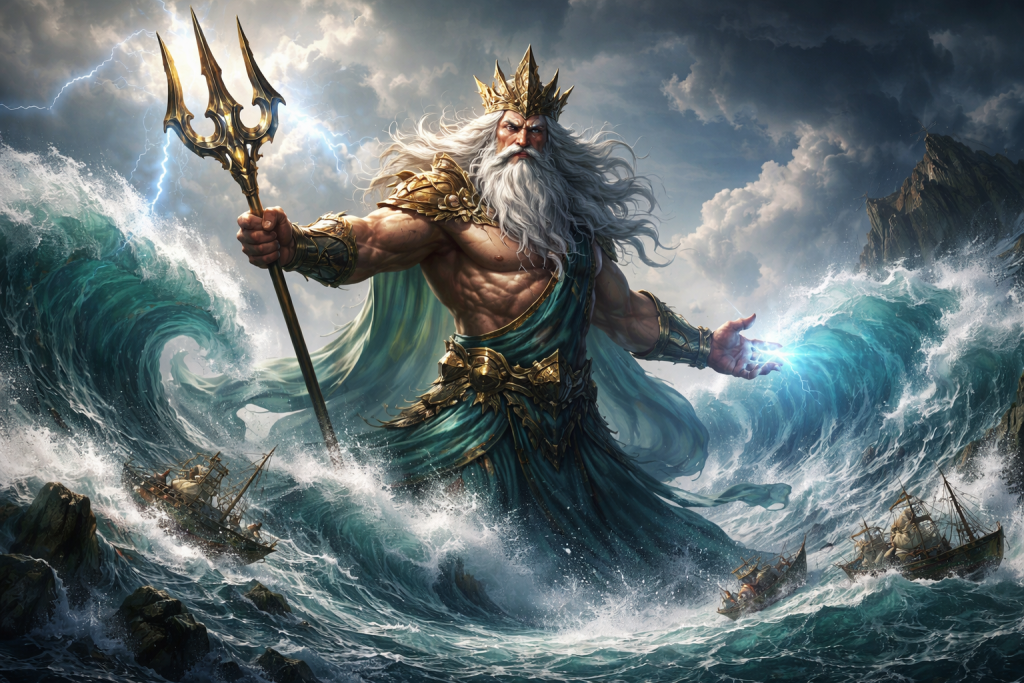
Hera is the goddess of marriage and family, and that is exactly why her myths sting. She is also the wife of Zeus, who cheats constantly. Hera’s anger is not abstract; it is personal, sharp, and sometimes ugly. In some stories Zeus even chains her with gold and suspends her between earth and sky after a revolt on Olympus. She often takes revenge not on Zeus (who is hard to punish) but on his lovers and his “outside” children. It is not a comforting portrait of marriage. It is a blunt one.
Poseidon’s role makes sense the moment you picture the sea. After Cronus is overthrown, Zeus, Poseidon, and Hades draw lots: Zeus gets the sky, Hades the underworld, Poseidon the sea, while the earth remains shared. Poseidon’s marriages and affairs fill whole branches of myth, but his basic personality stays familiar: he can be generous, and he can destroy you without warning. Sailors understood that better than anyone.
And honestly? Greek mythology sometimes reads like a long romantic TV series that keeps tipping into drama. Affairs, grudges, revenge plots, surprise children, petty rivalries that turn into disasters. You can see why people kept retelling these stories. They have the speed of gossip, but the stakes of theology.
How people worshipped: sacrifice, festivals, and keeping the peace
Greek religion was not just storytelling. It was ritual. People made offerings, held feasts, and sacrificed animals to honor the gods. Public festivals mattered because they were social glue: a way for the city to say, “We’re still in good standing.” The myths can get darker, too. Some tales mention human sacrifice, not as an everyday practice, but as a warning about what happens when the relationship between humans and gods goes wrong.
The basic idea is simple and surprisingly practical: you do not ignore the gods. You acknowledge them, you give thanks, you ask for help, and you try not to offend powers that are bigger than you.
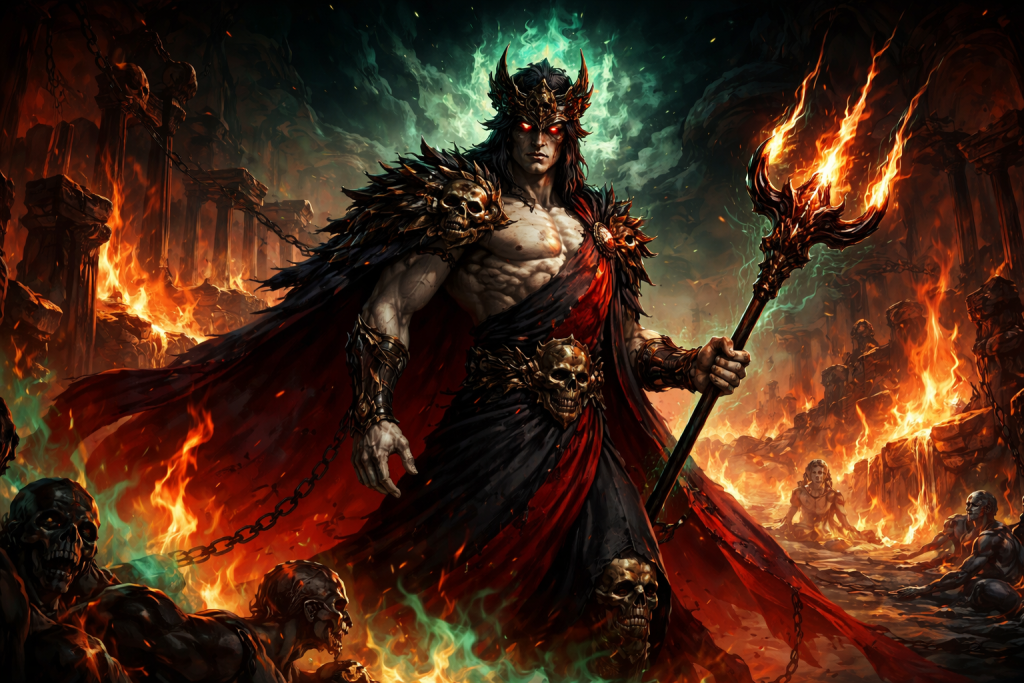
The underworld: Styx, Charon, and the coin under the tongue
Death had its own geography. The realm of the dead is Hades (also the name of its ruler). The river Styx runs through it, and Charon ferries souls across. Greeks sometimes placed a coin under a dead person’s tongue so the soul could pay the fare. Once inside, the dead wander as shadows across the meadows of Hades. Cerberus, the massive three-headed dog, guards the exit and makes sure nobody casually slips back out. Hades himself rarely comes to the surface and, in many stories, knows little of what happens on Olympus or on earth.
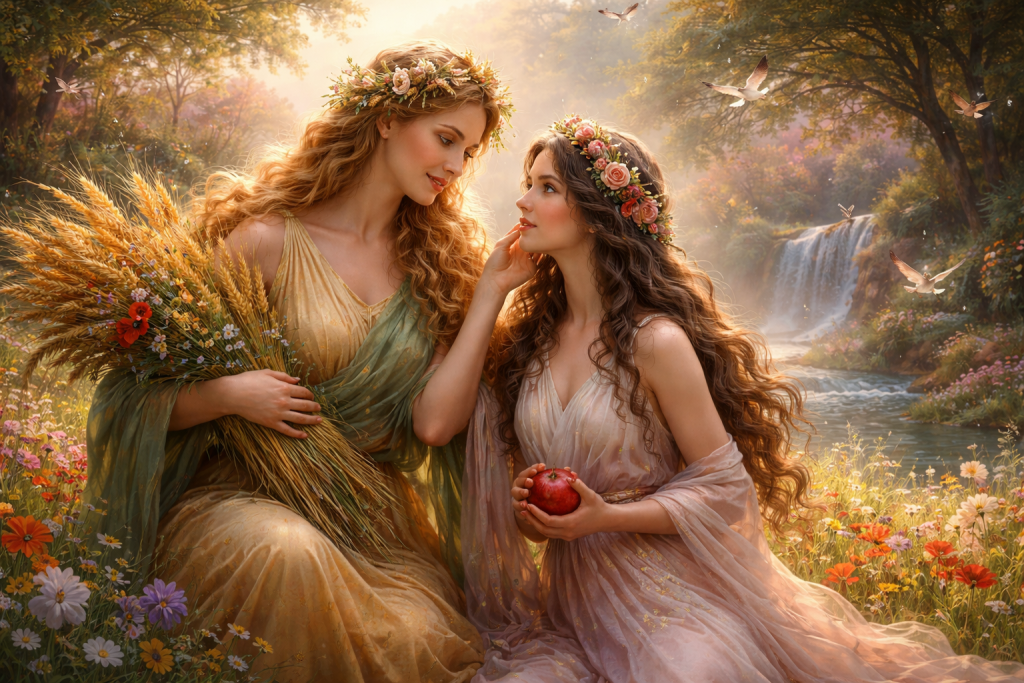
Demeter and Persephone: the myth that explains winter
One of the most emotionally direct myths is the story of Demeter and Persephone. Persephone, the daughter of Demeter, is seized by Hades when he rises to the world of the living in a golden chariot drawn by black horses. Demeter searches everywhere. Eventually Helios, the sun god, tells her what happened: Zeus allowed the marriage.
Demeter’s grief is not symbolic; it has consequences. The earth stops producing. Crops fail. Famine spreads. Humans stop offering sacrifices because they have nothing left to give. Even the gods feel the loss. Zeus sends Iris to ask Demeter, who has withdrawn to a temple built for her at Eleusis, to return. She refuses until a compromise is made: Persephone will spend part of the year with her mother and part with her husband below.
That’s the mythic explanation for the seasons. When Persephone is in the underworld, nature “sleeps” and winter arrives. When she returns, the world blooms again.
So yes, Greek gods show up everywhere now books, films, games, the occasional slot theme, because the characters are unforgettable and the stories move fast. But behind the pop-culture gloss is a religion that took the natural world seriously, treated ritual as real work, and explained life’s biggest shocks (storms, hunger, death, winter) in a language people could feel in their bones.
