
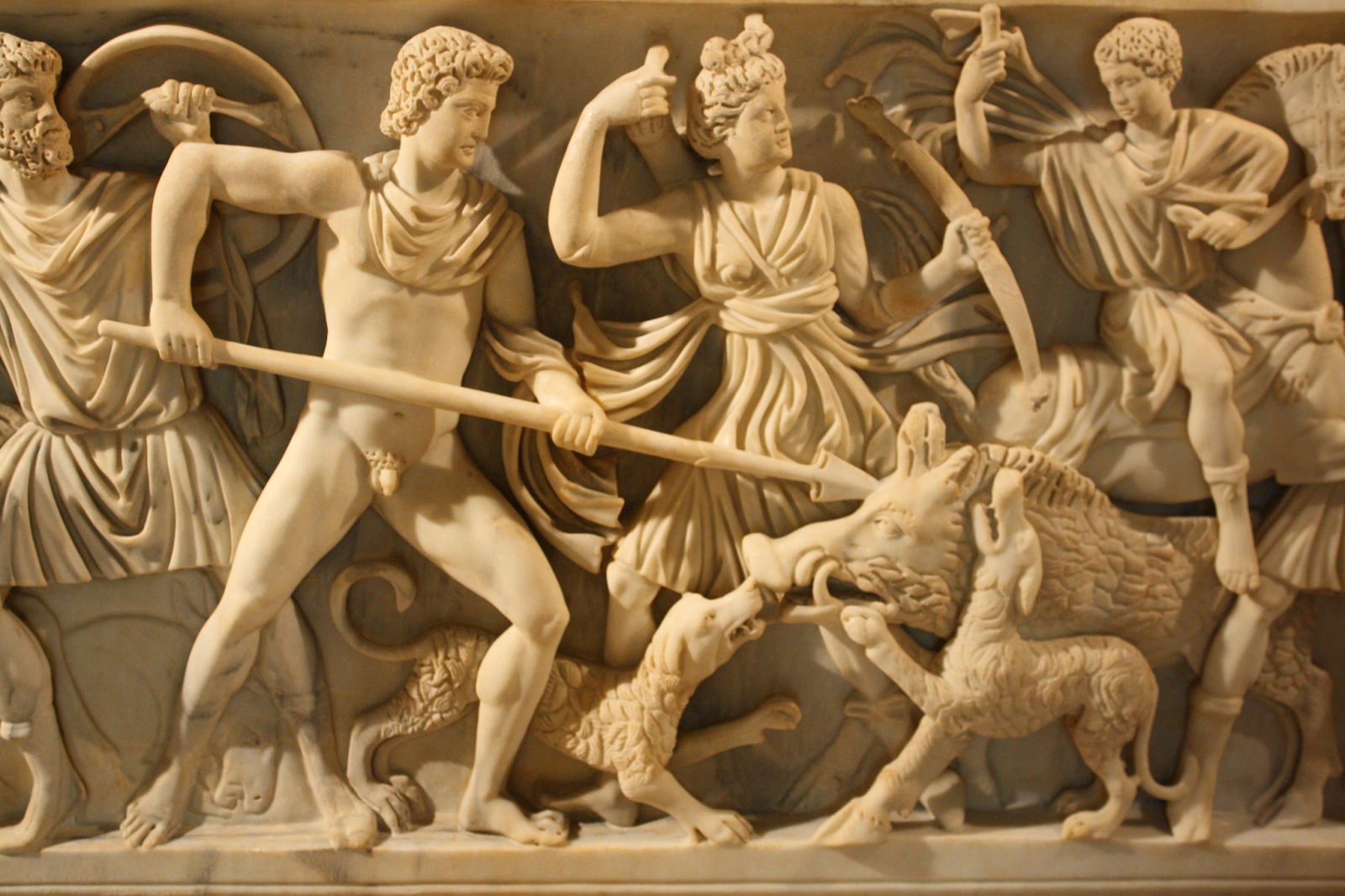
Most people think Zeus is an example of absolute confidence: a loud voice, strong opinions, a constant presence. But Zeus also always sought to prove his power, abusing it by punishing less powerful gods and defenseless humans. Is this confidence or a lack of it?
Greek legends were full of tales about gods who didn’t compete for attention. And yet, people naturally respect and trust them. That’s because these gods showed what we now understand as “silent confidence.”
Learn the meaning of quiet confidence from five examples of Olympian gods. You want to be as persuasive and naturally appealing as they are? No problem! We also included 5 tips on how to have quiet confidence.

Quiet Confidence: Meaning
Quiet confidence means being at peace with who you are. People (or gods) with this type of confidence do not believe that they are better than others. Hence, they don’t strive to prove their worth.
Where does silent confidence come from? Usually, people find peace with who they are because of how they were brought up. You can find out here if you have an innate advantage for silent confidence. Otherwise, it can be intentionally developed in adulthood.
Another reason why the Greek gods with quiet confidence won most loyalty is that they treated everyone with unconditional positive regard. They didn’t believe others owed them anything. Vice versa, they treated followers with respect, not because it was expected but because it reflected how they saw themselves.
Among people nowadays, this kind of confidence shows up in small, everyday behaviors. They don’t overexplain themselves. They are not afraid to be who they are, whether that looks serious, joyful, or silly.
5 Olympian Gods with Exemplary Silent Confidence
Some of the most influential gods from Greek mythology rarely fought for attention, yet their actions shaped entire worlds. Their confidence didn’t come from dominance or recognition, but from certainty in who they were and what they stood for.
We present 5 examples of gods and the different aspects of quiet confidence they represent.
Hades: Confidence is in loyalty to your essence
As the ruler of the underworld, Hades holds immense power. All he wants is for his underground kingdom to function and maintain balance. He doesn’t even need to interact with Olympian gods unless it’s an absolute necessity.
Hades always stays in his lane. He doesn’t need recognition that Zeus, Poseidon, and Aphrodite compete for.
Why so? He has an incredible sense of internal stability. Hades knows his role. We, as people, can learn a lesson from the legend of Hades: All that matters is what’s important to us, not to our family or society.
Hades is not the most loved god. And it’s undeserved. But he’s feared. It comes from people knowing that he doesn’t make exceptions. He’s loyal to his values.
Persephone: Saving yourself after life’s perturbations
Persephone begins her story as an overprotected daughter of an overbearing mother. She’s obedient, sheltered, innocent. Until something life-changing happens: she must become Queen of the Underworld.
Persephone’s quiet confidence shows up in how collected she remained. Yes, she faced an almost catastrophic event. But she was also so sure of her strength and durability that it gave her the confidence she would get through this.
In a modern world, an embodiment of Persephone is someone who was forced through difficult circumstances but preserved their will and curiosity for life. For example, someone who went through immigration, emotional abuse, loss of career, unexpected physical trauma but became a better person thanks to their endurance.
Prometheus: Trusting your judgement > opinion of others
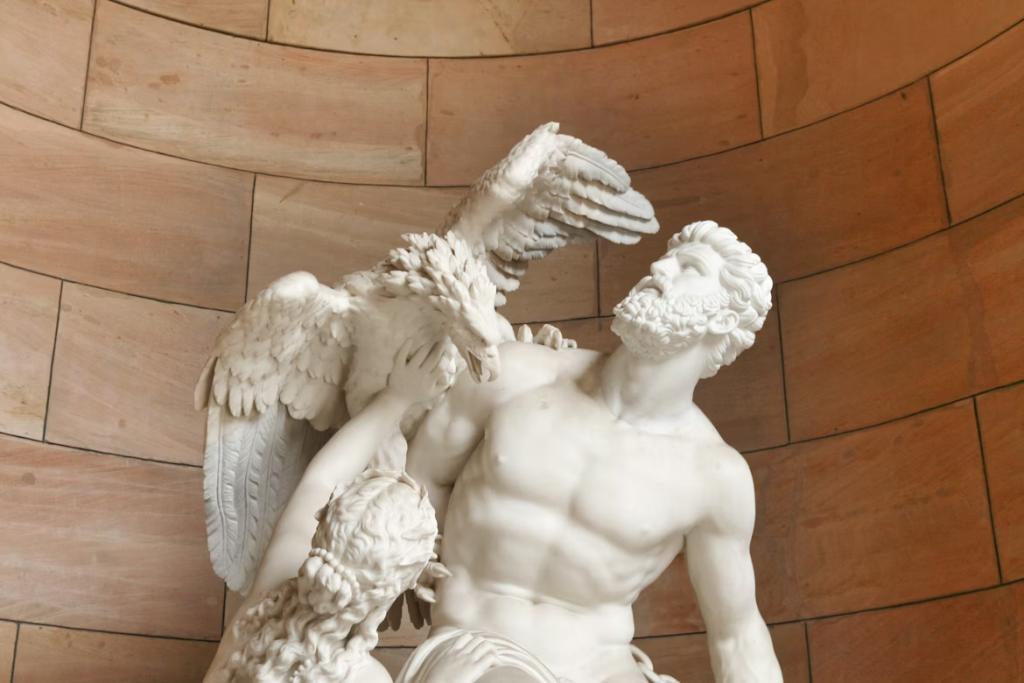
Prometheus is, so far, the best example of silent confidence among the Olympian characters. He was so confident and lovable that he couldn’t keep this love to himself but must have shared it with creatures that were inferior to him. He chose what he believed was right and gave fire to humankind, knowing he would suffer for it.
Prometheus has a strong internal compass. He trusts his judgment, even when it leads to consequences. That’s what makes his confidence “silent.” It’s not expressed through dominance or control, but through consistency with his beliefs.
If you stand your ground, believing that they are truthful and empathetic, you represent modern Prometheus. You don’t need to prove anything to anyone. Your actions speak for your morale.
Athena: Being comfortable with solitude
Athena is known for wisdom, strategy, and emotional control. She doesn’t need to rely heavily on authority because she simply trusts her judgment. And guess what? This silent confidence is persuasive, judging by the countless followers she has.
Athena was comfortable with solitude. But when she did engage, it was with a purpose. Born from Zeus’ head, her presence was so meaningful that she only asserted dominance with her presence.
Athena’s quiet confidence is also seen in how others respond to her. She is respected not out of fear, but because of her insight.
Hestia: Underrated self-sufficiency
Hestia is perhaps the most understated example of quiet confidence. Hestia knows her worth and her task: she focuses on inner balance. Since power wouldn’t help her achieve her life’s purpose, she simply doesn’t chase it.
This doesn’t make her weak. In fact, it represents a stable self-esteem. Hestia does not need to prove her importance because she already understands it. She even stepped away from the Olympus because it wasn’t something that mattered to her.
Hestia represents the kind of person who feels secure without approval because what matters to them is their own well-being, physical, mental, and spiritual. This looks like someone who doesn’t compete for attention but creates stability that others naturally gravitate toward.
How to Have Quiet Confidence Like the Greek Gods
Quiet confidence is indeed easier if you have innate tendencies, but it’s also achievable.
These examples of Greek gods didn’t become powerful because they tried to impress others. Their confidence came from self-trust and aligning their lives with their values. The same applies in real life.
We collected a few tips that can help you build quiet confidence like those of the Greek gods. The goal of this advice is to create a life where confidence naturally shows up.
Take care of yourself
Confidence starts with self-respect, and self-respect is built through action. The way you treat your body and mind then transforms into your self-perception and self-worth. When you take care of your basic needs, like sleep, nutrition, movement, and rest, you reinforce the idea that you matter.
Psychologically, this works because your brain doesn’t separate behavior from identity. You must learn this lesson the hard way: take care of yourself because you are the only one responsible for yourself. When others see the self-worth you radiate, they will treat you correspondingly.
Do solitary activities
A lot of insecurity comes from performing for others. People adjust their behavior in order to avoid rejection.
That’s why we recommend trying to do things on your own. When you’re alone, there’s no one to impress, no expectations to meet, and no role to play. Here are the main rules:
- Go somewhere: for a walk, visit a church, or sit in a café alone.
- Relax your muscles, face, unclench your jaw, and sit, stay, or lie comfortably.
- Do whatever the place requires while being as relaxed as possible.
- The main rule: don’t try to perform or pretend to be a certain aesthetic.
Get to know yourself
Quiet confidence becomes much easier when you actually know who you are. Many people struggle with confidence because they “don’t know.” When someone asks what they want, where they want to go, or their preferences, they answer, “I don’t know. You choose.” And people can read these subtle cues of lack of confidence.
A simple way to start getting to know yourself is to take a notebook and write things down. Begin with your values. What matters most to you in relationships, work, and life? Then move to smaller things: what food you like, what activities you enjoy, what you want to try in the future.
This exercise may seem basic, but it builds your identity. The more clearly you understand your preferences and priorities, the less you rely on others to define them for you. And that’s what people call silent confidence.

Try rejection therapy
One of the biggest barriers to confidence is the fear of rejection. Rejection therapy is a type of psychological intervention, but it can be practiced independently in small amounts. Rejection therapy works by facing your fears. It’s that simple.
Put yourself in situations where you’ll 100% get rejected. Some ideas:
- Apply for a position you feel underqualified for.
- Ask to make your own coffee at a café.
- Ask a stranger to film a video with you.
Imagine: if you needed 1,000 rejections to reach your goal, would you be so scared of that first rejection?
Practice speaking nonsense
If you feel confident in your judgments and thinking, you already show some quiet confidence. But if you are afraid to express them out loud, here’s one exercise for you.
Stand in front of a mirror and speak without filtering yourself. Imagine giving an interview to Hermes, accepting an award from Apollo, or simply explaining your opinion on something, even Greek myths. The content doesn’t matter as much as the act of expressing yourself openly.
This exercise gradually turns expressing yourself from “I would never” to a familiar scenario. One day, you may not even notice how you started passionately explaining your opinion in a circle of friends. Simply, out of habit.
Conclusion: Godlike Quiet Confidence Is for Everyone
Quiet confidence is for everyone because it’s based on self-respect. The Greek gods remind us that true power doesn’t have to be overshadowing or dominant.
One tip in the end: choose one god you particularly admire or see yourself in and think. What feature makes them so confident? By practicing small acts of silent confidence every day, you won’t notice when you remind yourself of your favorite god.
