
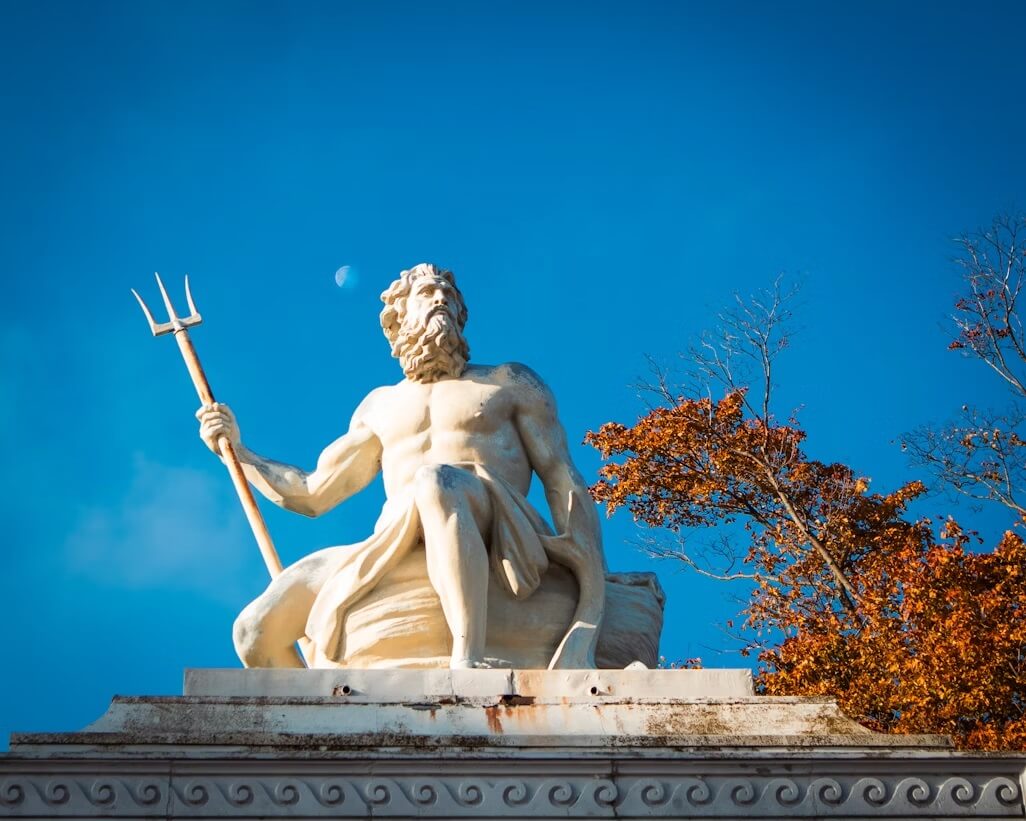
In ancient Greece, belief was more than ritual—it was a way of living, a framework through which people understood nature, justice, and community. The gods were present in every field, from law and medicine to war and harvest. Instead of a separate spiritual realm, faith blended into every act of civic and domestic life, guiding everything from architecture to public festivals.
Greek religion did not rest on sacred texts or strict doctrines but instead on tradition, ritual, and myth. With temples in every city and gods represented in sculpture, literature, and public ceremony, belief was visible in nearly every facet of Greek culture.
The Role of Religion in Civic Life
The religion of ancient Greece was tightly woven into its political and cultural identity. Temples stood at the centers of cities not only as places of worship but as sites of communal pride. City-states often claimed divine patrons—Athens, for instance, was named for the goddess Athena.
These deities weren’t distant or abstract; they had human traits, family rivalries, and preferences. People believed the gods influenced war outcomes, weather patterns, and social order. Local festivals and public rituals served as ways to honor them, gain favor, and reinforce civic unity.
In schools, religion and mythology were part of a well-rounded education. Boys recited the Iliad and Odyssey, internalizing stories about heroism, fate, and divine justice. This foundation helped them think about right and wrong as they matured into citizens. Teachers often told students to “do your homework” with the same seriousness as they approached public duties, a mindset that modern students might relate to using services like DoMyEssay when under pressure to perform well.
Worship Practices and Sacred Spaces
Worship in ancient Greece took many forms: prayers, animal sacrifices, libations, and festivals were all part of daily ritual. Temples were the formal centers of worship, though most people also maintained small household altars for daily offerings to protective deities like Hestia.
Priests and priestesses conducted rites, interpreted omens, and oversaw festivals. Their roles weren’t necessarily lifelong or professional; in many cases, prominent citizens or even laypeople could perform sacred duties during certain occasions.
Public festivals played a central role in the religious calendar. Events like the Panathenaea in Athens included processions, sacrifices, and competitions. Such gatherings reaffirmed the connection between civic pride and divine favor.
Here’s a breakdown of key features of worship:
| Practice | Purpose |
| Animal Sacrifices | Offered to gods for favor, thanks, or forgiveness |
| Libations | Wine or oil poured in honor of deities |
| Oracles | Consulted for divine guidance on political decisions |
| Festivals | Honored gods and reinforced social cohesion |
| Votive Offerings | Left at temples to show gratitude or ask for healing |
Greek Mythology and Religious Thought
A common question today is: was Greek mythology a religion? The answer lies in its function. Myths explained the world’s origins, natural disasters, moral lessons, and human behavior. Unlike dogmatic belief systems, Greek myths evolved through storytelling and performance. There was no single “holy book,” but rather a shared cultural memory shaped by poets, dramatists, and philosophers.
So, is Greek mythology a religion in the formal sense? Not exactly by modern standards—but it played the same role. It shaped ethics, informed law, and guided public ceremony. Mythological stories were not just fiction; they offered explanations for the unexplainable and taught lessons about hubris, piety, and justice.
The question of what religion is Greek mythology reflects modern curiosity about classifying ancient beliefs. In truth, it was less about categorization and more about communal ritual and shared values. The gods, although flawed and fickle, represented forces larger than any single person or city.
Influence on Law, Medicine, and War
The reach of religion in ancient Greece extended well beyond temples and myths. Many laws were believed to reflect divine order, and breaking them could be seen as an offense not just against society but against the gods.
Healing, too, was intertwined with belief. Temples to Asclepius served as early medical centers, where patients would sleep in sacred spaces hoping for divine visions to cure them. These sanctuaries often included baths, gyms, and areas for rest and recovery.
In war, generals sought signs from oracles or interpreted sacrificial omens before battle. A poor sign could delay a campaign, while a favorable one would give troops confidence.
Philosophical Challenges and Shifts
While traditional religion held firm public support, philosophical schools in Athens began raising questions. Thinkers like Socrates challenged the morality of certain myths and emphasized ethics derived from reason, not just ritual. His student Plato, while respectful of divine ideas, sought a more abstract concept of truth and justice.
Aristotle maintained a belief in a prime mover—an eternal, rational cause behind all existence. This shift toward abstract theology laid the foundation for later philosophical and religious thought across Europe.
Still, religion in ancient Greece never fully lost its public role. Even as ideas evolved, festivals, rituals, and myths remained central to the identity of each polis.
Summary: Greek Belief at a Glance
To simplify how faith shaped daily life in Ancient Greece, here’s a quick list:
- Civic Identity: City-states often linked their founding to specific gods.
- Public Festivals: Blended worship with entertainment, sport, and politics.
- Daily Rituals: Included prayers, sacrifices, and home altars.
- Ethical Guidance: Myths offered lessons in behavior and justice.
- Social Structure: Roles like priests and priestesses reflected civic duties.
Final Thoughts
What was the religion of ancient Greece? It was a collection of rituals, stories, and traditions that touched every part of life. From farming and warfare to lawmaking and education, belief played a guiding role in shaping values and community. It didn’t require blind faith or strict adherence, but it did demand respect for the gods, reverence for tradition, and a shared cultural memory built on storytelling and ceremony.
Whether asked today what was daily life like in Athens or what were ancient Greek religion facts, the answer often leads back to this: the gods were always near—at the altar, in the sky, or on the stage—living side by side with the people.
