
Did you know that at its peak, the Roman Empire governed approximately 20-25% of the world’s estimated population, yet many of us only remember a few names like Caesar? Ancient Rome is a foundational pillar of Western civilization. But trying to piece together 1,000 years of history between work meetings or study sessions can feel like an impossible task to fully learn about ancient Rome.
To help you bridge this gap, we’ve structured this guide around credible sources, including nonfiction books and summaries, Nibble lessons on history, and databases to identify the most essential need-to-know pillars that consistently appear in academic and cultural discussions. Our research focused on finding a balance between historical accuracy and modern relevance, ensuring these facts stick.
The following list highlights the core elements of Roman life and power. Review these curated facts to see how this ancient superpower still shapes your world today!

1. Roman Republic System: Understanding Power Distribution
Before it was an Empire ruled by all-powerful emperors, Rome was a Republic (509–27 BCE). This was a revolutionary political system designed to prevent any one man from having too much power. It introduced the concept of checks and balances through the Senate and elected consuls. If you’ve ever felt confused by the transition from Republic to Empire, you’re not alone; it’s one of the most complex shifts in political history, and the most interesting facts about ancient Rome.
You can learn structured lessons that break down the Senate’s hierarchy and the consuls’ roles through visual timelines. You can get to see the real scenes behind the politics, like:
- Senate Influence: A body of elders who advised the city’s leaders.
- Consuls: Two leaders elected annually to oversee the army and government.
- The Veto: The literal Latin word for I forbid, used by Tribunes to protect commoners.
2. Roman Roads Network: The Logistics of Expansion
Romans built around 53,000 miles (85,000 km) of roads by the 4th century AD, with mile markers creating the phrase all roads lead to Rome. This is one of many fun facts about ancient Rome. Actually, the Romans were the masters of infrastructure, building over 400,000 km of roads. This was a sophisticated military and economic tool.
Stanford’s ORBIS project accurately models Roman road travel times for legions, goods, and tax revenue, showing unprecedented speed/connectivity for the era. Understanding the scale of the empire becomes much easier when you visualize these routes as the internet of the ancient world. You can find excellent visual maps of these routes on Nibble, which helps compare ancient travel times to modern logistics.
3. Roman Army Structure: The Power of the Legion
The Roman military was a masterpiece of organization. Unlike the disorganized war bands of their neighbors, the Roman Legion was a professional machine. According to accounts by the historian Polybius, the legion’s strength lay in its rigid hierarchy and adaptability.
By learning the structure, you see how Rome was able to recover from massive defeats and eventually conquer the Mediterranean:
- The Legion: A unit of roughly 5,000 heavy infantry soldiers.
- Centurions: The backbone of the army, experienced officers leading groups of 80–100 men.
4. Roman Daily Life: Beyond the Toga
Daily life in Rome was a stark contrast between the ultra-rich and the urban poor. While movies focus on marble villas, most Romans lived in cramped apartment blocks called insulae.
Using insights from the World History Encyclopedia, we can see that Roman life was remarkably urban and regulated, revolving around the market (Macellum) and the public baths:
- Diet: The average citizen relied on the grain dole—subsidized bread provided by the state.
- Social Rituals: The morning salutation, where clients visited their wealthy patrons for favors or money.
5. Roman Engineering: The Blueprint of Modern Cities
Roman engineers perfected the arch and invented Roman concrete (opus caementicium), which could be set underwater. This allowed them to build massive structures, such as the Pantheon, and a sprawling aqueduct system.
This is a great example of learning by doing, seeing how these ancient techniques are still mirrored in our modern bridges and skyscrapers:
- Aqueducts: Used gravity to transport water over dozens of miles into city fountains.
- The Arch: Allowed for larger, stronger buildings while using less material than solid walls.
- Concrete Longevity: Volcanic ash made their concrete more durable than many modern equivalents.
6. Roman Entertainment: The Social Purpose of Games
Entertainment like gladiator battles and chariot racing was a political tool known as Bread and Circuses (panem et circenses). It kept the restless urban population occupied. Data from Smithsonian Magazine suggests the Colosseum could hold up to 50,000 people, organized strictly by social class:
- The Colosseum: An engineering marvel with elevators and trap doors for animals.
- Chariot Racing: Far more popular than gladiators, with the Circus Maximus holding 150,000 fans.
7. Roman Law System: Foundations of Modern Justice
The Twelve Tables were the first attempt by the Romans to create a code of law. This moved society away from the whims of kings and toward a system where even the powerful had to follow written rules. Many legal concepts we use today, such as innocent until proven guilty, have their roots in Roman jurisprudence, as documented in many sources.
8. Roman Religion: Linking Gods with Daily Decisions
Roman religion was polytheistic and deeply practical. It was rather a contract: the Romans performed specific rituals, and in exchange, the gods kept the state safe. Every home had a small shrine (lararium) to the household spirits:
- Syncretism: The Romans often adopted the gods of the people they conquered (e.g., Greek gods).
- The Vestal Virgins: Priestesses who kept the sacred fire of Rome burning; its extinction was seen as a national disaster.
- Augury: The practice of reading the flight of birds to determine if the gods approved of a political move.
9. Fall of the Roman Empire: A Multi-Causal Decline
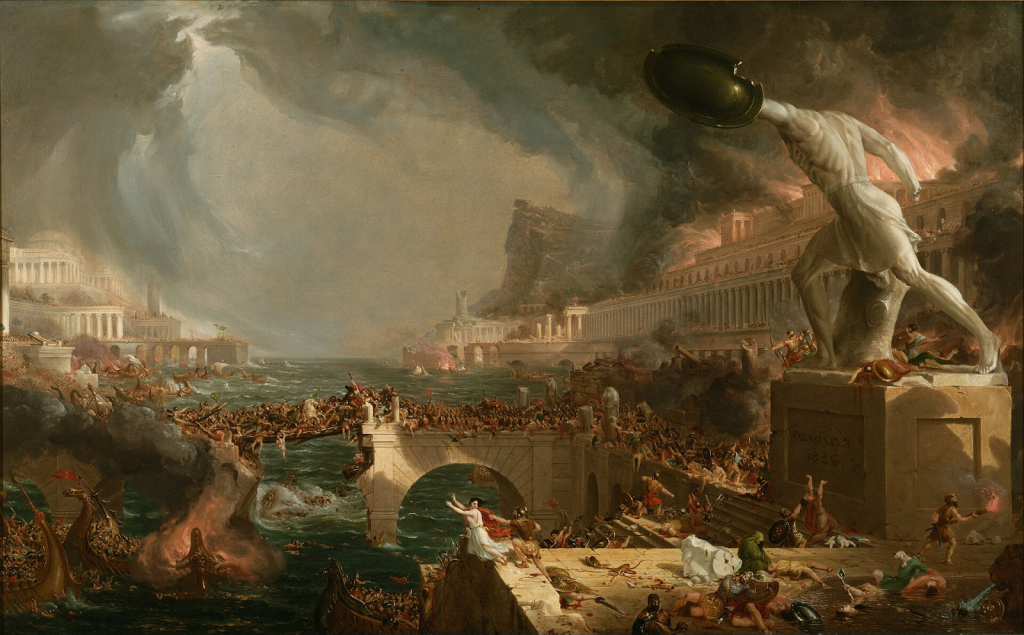
The Fall wasn’t a single event but a long process. Historians like Peter Heather point to a perfect storm of economic inflation, military overspending, and the arrival of migratory tribes like the Goths.
It’s a vital lesson in how complex systems can eventually overextend themselves:
- Inflation: Emperors devalued currency to pay the army, causing prices to skyrocket.
- Division: The empire was split into East (Constantinople) and West (Rome) to make it easier to manage.
- The Sack of Rome (410 CE): The psychological blow when the city was breached for the first time in 800 years.
10. Latin Language Impact: The Roots of Your Vocabulary
Even though Latin is considered a dead language, it lives on in English and the Romance languages (Spanish, French, Italian). Approximately 60% of English words have Latin roots. Mapping these connections is a fantastic way to improve your vocabulary and understand the logic of language:
- Legal and Medical Terms: Latin remains the standard for specialized fields today.
- The Alphabet: The very letters you are reading right now are the Roman (Latin) alphabet.
11. World’s First Concrete Revolution: New Construction Era
Roman concrete transformed construction forever. Unlike brittle stone, their opus caementicium mixed volcanic ash, lime, and aggregate to create a waterproof, self-healing material that sets underwater.
The Pantheon’s massive dome (43m diameter, 126 AD) still stands thanks to this, the largest unreinforced concrete span ever. Modern scientists study it for sustainable building; cracks slowly refill with lime crystals over time.
12. Urine Tax That Didn’t Stink: Money Does Not Stink
Emperor Vespasian (69-79 AD) taxed public urine collection, used for tanning leather and cleaning togas with ammonia. When son Titus complained it was gross, Vespasian held coins under his nose, saying Pecunia non olet or Money doesn’t stink. This pragmatic revenue funded Colosseum repairs, proving Rome’s genius for turning waste into wealth.
13. Trajan’s Market: Ancient Shopping Mall
Completed in 110 AD, Trajan’s Market was a multi-level complex with 150+ shops, tabernae, libraries, and administrative offices. Shoppers bought spices, silks, and glassware under vaulted arcades.
It is like an urban planning marvel rivaling modern malls. Its hexagonal design maximized light and space, serving as Rome’s economic nerve center for centuries.
14. Hypocaust: Underfloor Central Heating
Roman engineers invented hypocaust heating: hot air from furnaces circulated beneath raised floors and through wall channels, evenly warming villas. Public baths and military forts used this luxury system, controlled by adjustable vents. Slaves stoked fires continuously. It is early evidence of sophisticated climate control predating radiators by 1,800 years.
15. Thermopolia: 2,000-Year-Old Fast Food
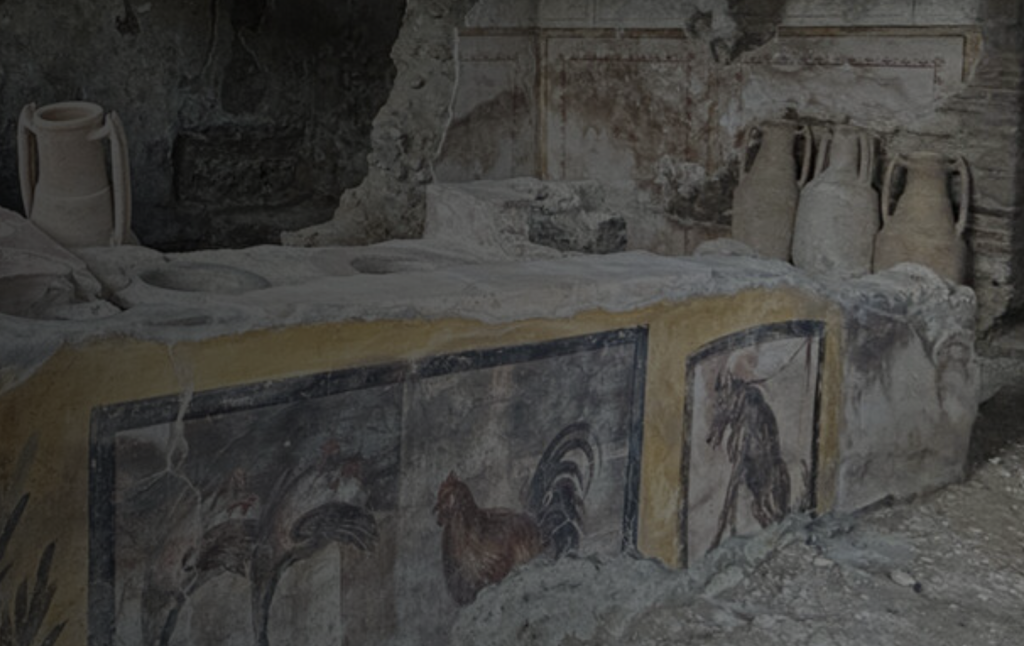
Thermopolia were street-side counters, or, let’s say, snack bars, serving hot meals to urban workers, like bread, olives, lentils, and wine from earthenware jars (dolia) sunk into the counters. Pompeii preserves 80+ examples with frescoed menus. This panis et circenses (bread and circuses) system fed Rome’s million-plus population, proving the ancient practicality of street food.When we look at history through the lens of structured facts, the chaos of the past starts to make sense, and we learn about ancient Rome. Ancient Rome is the blueprint for our roads, our laws, and even our language!
