
There was a fountain silver-clear and bright,
which neither shepherds nor the wild she-goats,
that range the hills, nor any cattle’s mouth
had touched—its waters were unsullied—birds
disturbed it not; nor animals, nor boughs
that fall so often from the trees.
-Ovid, “Metamorphoses”, 3.405-409, transl. Br.More (1922)
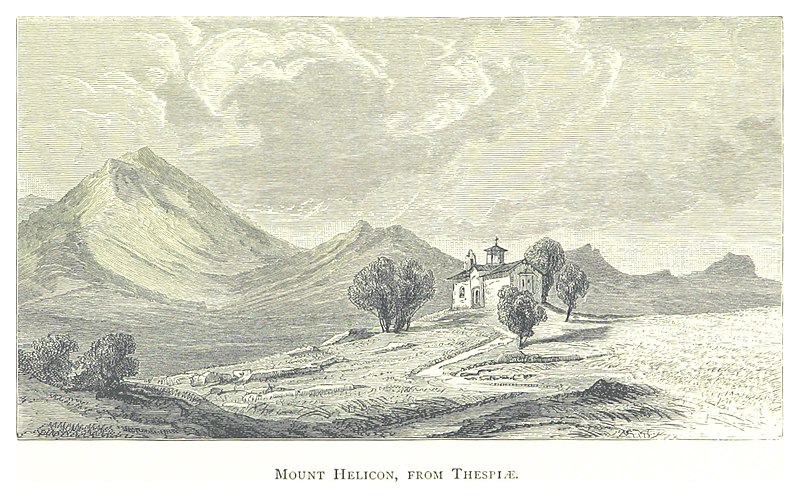
Thespiae, one of the many great cities in ancient Greece, is nestled at the eastern foot of the mighty Mount Helicon, the home of the Muses. Thespiae, despite not being a large city or a commercial center, played an important role in the Persian Wars and is associated with numerous myths and stories. It provided sanctuary to heroes such as Heracles and served as a gathering place for the worship of Eros and the Muses.
Thespiae Key Facts
| Key Fact | Details |
| Name | Thespiae |
| Deities | Eros, Muses |
| Mythological Events | Heracles’ stay with King Thespius, Narcissus demise, Eros and the Muses |
| Accessibility | by car or bus from Athens (about 1h30) |
| Visit Duration | half or full day |
Overview
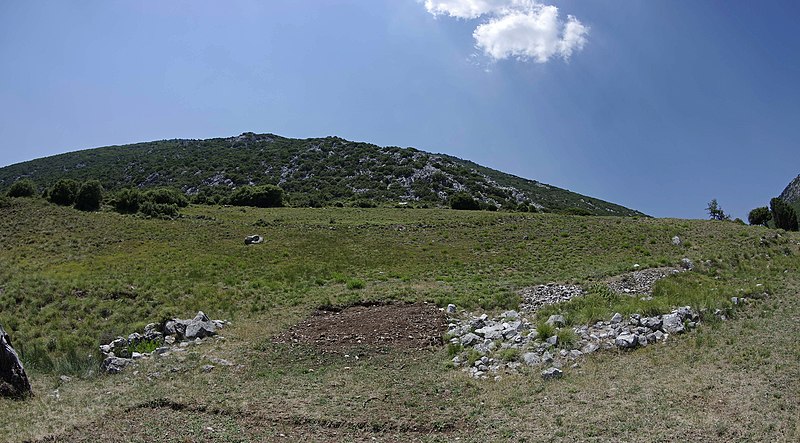
Thespiae was a city of great historical prominence, associated with pivotal battles – like the Battle of Thermopylae. It was also a city where history blended with art and philosophy. As with most Ancient Greek cities and towns, the founding of Thespiae is tied to a divine being, the nymph Thespia. It was mostly famous for worshiping the god of love, Eros. The city’s ebb and flow through history, from blood-spilling battles to artistic masterpieces, definne its legacy; a legacy which is, unfortunately, not that evident today.
Practical Travel Tips
Getting There
Thespiae is accessible via car from Athens, with a journey time of around one hour and a half. The modern city of Thespies is also connected to Athens via bus.
Accessibility
The archaeological site does not have many structures and getting around town is simple, whereas hiking requires more mobility.
Best Time to Visit
Spring (April to June) and autumn (September to October) offer ideal weather conditions for exploring the town without the intense summer heat
Duration of Visit
One full day is sufficient to visit the remaining sites, the museum of Thebes, and hike around Mount Helicon.
Budgeting
Nearby accommodation near the site tend to be reasonably priced. The majority of Thespiae’s findings are on display at the Thebes Museum, which costs 6 euros to enter.
Local Amenities
Thespies, the nearest modern town, offers a range of accommodation, dining, and basic amenities for travelers.
Thespiae in Greek Mythology
While Thespiae was neither a large city nor a commercial center, it played an important role in Ancient Greek mythology. Thespiae, guarded by Eros and the Muses, was a cultural and artistic hotspot.
Origin of the Name
The city’s name was possibly derived from its legendary founder, Thespius. He was the son of Erechtheus, the renowned King of Athens. Thespius married Megamede, and they had fifty daughters together.
However, Pausanias mentioned another potential founder of the city. That would be the Naiadic nymph Thespia. Thespia was the daughter of the river god Asopus and Metope, who in turn was the daughter of the river god Ladon. According to this story, the god Apollo kidnapped the Naiad and took her to a city west of Thebes, which was later named after her.
Heracles and the daughters of Thespius
Heracles, the renowned hero, was once tasked with killing the Lion of Cithaeron. This lion was a wild animal that ravaged the territories of King Thespius of Thespiae and King Ampitryon of Thebes. To persuade him to get rid of the lion, Thespius offered Heracles his fifty daughters as a reward.
Heracles hunted the lion for 50 days. During the night, he slept with one of Thespius’ daughters. According to this account, all of Thespius’ daughters conceived and bore sons. The sons of Heracles and the Thespiads then helped their father establish a colony in Sardinia.
Another version states that Heracles slept with forty-nine of the daughters in one night. The one who refused was punished to serve as a priestess to one of the temples of Heracles.
The Tale of Narcissus
Narcissus was a young Thespian hunter who was so stunning that men and women stopped to admire him. According to Ovid’s Metamorphoses, Narcissus rejected everyone’s advances. But when he rejected the nymph Echo, she begged the gods for vengeance. Nemesis agreed and led the young Narcissus to a fountain near Thespiae whose water was so clean and pure that it resembled a mirror.
Narcissus stopped to drink some water, but when he noticed his own reflection in the pool, he fell in love with it. He tried unsuccessfully to touch the reflection and couldn’t stop admiring his own beauty. He became entrapped by it, unable to move, eat, or drink. Finally, in agony at not being able to reach this reflected love, he began pounding his chest until he died. A stunning white flower bearing his name, Narcissus—possibly the wild daffodil—sprouted from his body.
Eros and the Muses
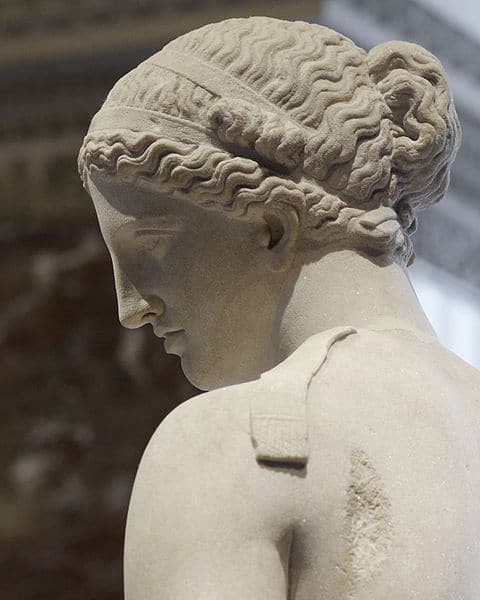
The Thespians revered Eros, the god of love and desire. Many works of art depicting Eros could be found throughout the city. The most well-known of these was Eros, by the sculptor Praxiteles. It was so popular that crowds flocked to Thespiae to see it.
Other famous Thespiae sculptures include an Aphrodite, which may have inspired Venus of Arles, and a bronze Eros by Lysippos. Some accounts mention a lost statue of Cithaeronian Hera.
The Muses were also venerated in Thespiae. Around a sacred spring that Pegasus created at Mount Helicon, the goddesses of science and the arts used to congregate. Hidden in the Valley of the Muses was a shrine built by the Thespians for the Muses.
The Thespians commemorated these deities with two festivals. The god of love was worshipped at the renowned Erotidia festival. In the Valley of the Muses, a festival known as the Museia was hosted to honor the Muses.
The Thespian Dragon
Another myth associated with Thespiae was that of that of the Thespian Dragon. The Thespian Dragon was a ferocious monster that wreaked havoc to the surrounding area. By order of Zeus, every year, a young man would be chosen by lot to be sacrificed to it.
At some point, young Kleostratos was selected to be fed to the beast. However, his lover Menestratos devised a plan: the young man would make a bronze breastplate with fishhooks, causing the monster to die after eating him. Menestratos sacrificed himself to the Dragon to save his lover, but he defeated the dragon in the process.
Thespiae in Ancient Greek History
Aside from its rich mythology, Thespiae played an important role in Ancient Greek history. It was a member of the Boeotian League and contributed significantly during the Persian Wars.
The City of Thespiae
While we don’t know when the city of Thespiae was founded exactly, it certainly was before 750 BC. It could either be of Thessalian or Mycenaean origin. During the Archaic period (c. 800-500 BC), Thespiae was heavily influenced by Thebes. The local aristocracy was closely tied to Theban nobility, limiting the city’s ability to establish power independently. Despite this, Thespiae began to gain military strength and establish its own identity. The city’s importance grew when it defeated and destroyed the nearby settlement of Ascra, claiming additional territory.
Thespiae during the wars
Thespiae’s fate shifted dramatically during the Persian Wars. When Persian forces invaded Greece in 480 BC, Thespiae distinguished itself through bravery. The Thespians sent a contingent of 700 hoplites to fight alongside the Spartans in the famous Battle of Thermopylae. These soldiers fought valiantly alongside King Leonidas and his troops, deciding to stay and defend their native land even when defeat was unavoidable.
Following the Battle of Thermopylae, Thebes supported the Persians and denounced Thespiae and Plataea to Xerxes I. When Xerxes’ army invaded and burned Thespiae, the city stood firm against oppression. The remaining inhabitants joined the Confederation of Greek city-states at the Battle of Plataea in 479 BC, contributing 1,800 men to the Greek forces.
During the Peloponnesian War, the city joined forces with Sparta in battles against Thebes and Athens. During the Peloponnesian War (424 BC), Thespiae suffered heavy losses at the Battle of Delium, where it fought alongside the Boeotian army against Athenian forces. Following the defeat, Thebes accused Thespiae of pro-Athenian sympathies, which resulted in the dismantling of its defensive walls.
By 394 BC, during the Corinthian War, Thespiae had switched alliances again, siding with Sparta once more. The city’s military role continued until 373 BC, when it was defeated by Thebes in the Battle of Leuctra. Following their defeat, the Thespians were exiled, resulting in a significant decrease in the city’s power.
Thespiae after the Hellenistic Era
Finally, in 335 BC, Thespiae aided Alexander the Great in destroying Thebes. The city was revitalized, and it formed alliances with the Roman Republic. Throughout the Roman period, Thespiae was a significant town known for its cultural contributions, particularly in the arts. It became a free city with some degree of self-government.
The city was eventually abandoned or destroyed. The modern town of Thespies stands near the location where the Thespiae once shone.
Exploring the Location: Thespiae
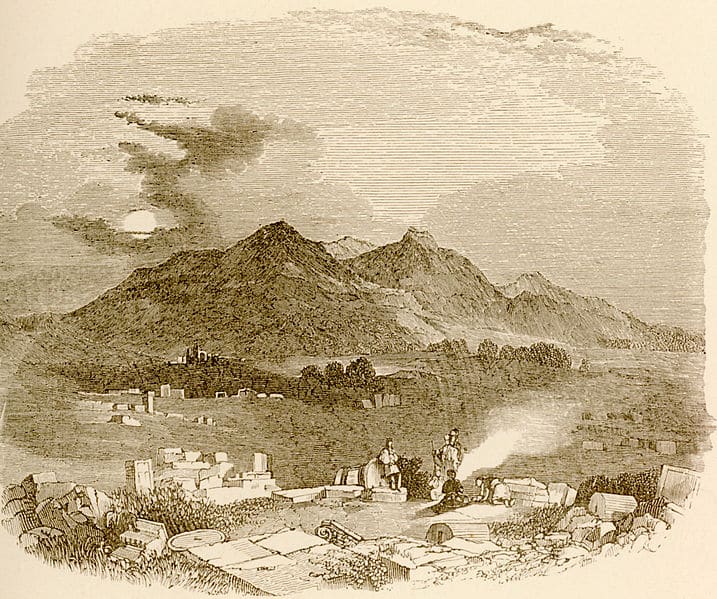
Unfortunately, few remains of the ancient city can be found today. The modern town of Thespies is a small, rural town that doesn’t even house a museum. The majority of the exhibits unearthed in the area are currently on display in the nearby Archaeological Museum of Thebes. The few structural remains are described below.
The Acropolis of Thespiae
The acropolis housed fortifications, demonstrating its strategic importance. An oval line can be found near Thespiae, with foundations on the east and south, which most likely formed the Acropolis of Thespiae.
The Thespian Lion Tomb
Discovered in the 19th century, the communal tomb is thought to commemorate those who perished at the Battle of Delium. It contains both an in-situ pyre and the cremated remains of Thespians. A colossal stone lion serves as a symbol of courage and sacrifice.
The Valley of the Muses
The ancient Greek site on Mount Helicon near Thespiae served as a sanctuary to the Muses. A small rectangular foundation could allude to a temple of the Muses. On the mountain slope, remains of a theatre can also be found.
Last Thoughts
While the ancient town of Thespiae has vanished over the centuries, the few remnants are a testament to the once-important center of the arts. While it was a notable city, the remains are scarce, so we would recommend that you combine your visit with a trip to nearby Thebes. Alternatively, you can go hiking on Mount Helicon, the Muses’ mountain. Ultimately, the sacred mountain’s serene yet primal atmosphere is sufficient justification for a visit.
FAQs about Thespiae
Thespiae was vital in Greek history for its role in various wars and as a cultural hub for art and mythology, particularly related to Eros and the Muses.
The Eros of Praxiteles was a famous sculpture that symbolized the city’s devotion to Eros. It drew visitors from all oveer Greece to behold its beauty and artistry.
It is not from the city of Thespiae that the term “Thespian” for an actor originates. Its beginnings can be traced back to the poet Thespis, the first personn to ever take the stage in a character-playing role—also known as the “Inventor of Tragedy”.
Featured Image Credit: FARRER, Public domain, via Wikimedia Commons


_p145_MOUNT_HELICON_FROM_THESPI%C3%86.jpg)