
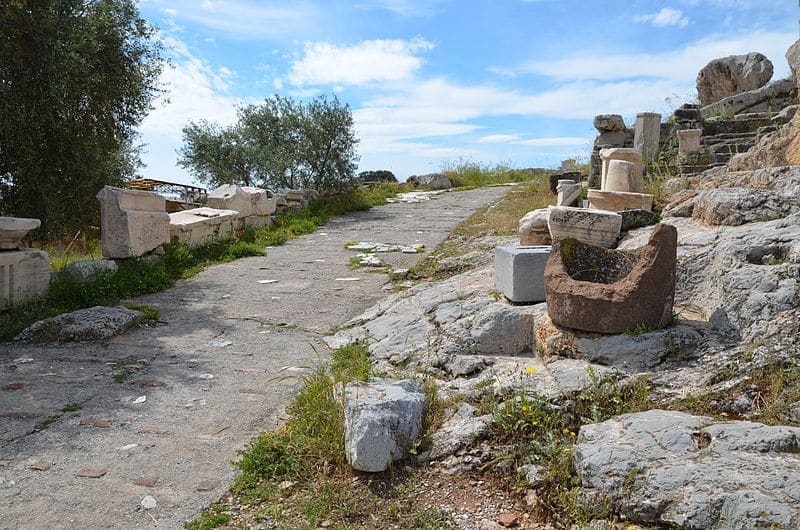
…my heart
prompted me once more to take
the road that terminates among the ruins
of the Soul’s Temple, at Eleusis.
-A. Sikelianos, “The Sacred Way” 88-91 (1935), transl. E.Keeley & Ph. Sherrard
Eleusis, just a hair’s breadth away from Athens, was one of the most important religious centers in ancient Greece and one of Attica’s 12 most important cities. This town, which holds great cultural significance even today, was the home of the Eleusinian mysteries. The renowned Eleusinian Mysteries were secret religious rites dedicated to the goddess Demeter and her daughter, Persephone. Eleusis played a crucial role in shaping Greek religious thought, but it was also a town of great historical significance. Let’s find out more about this intriguing site.
Eleusis Key Facts
| Facts | Details |
| Name | Eleusis, Elefsina |
| Deities | Demeter, Persephone, Hades |
| Mythological Events | Abduction of Persephone, Demeter’s Search |
| Accessibility | by car or bus from Athens (about 1 hour) |
| Visit Duration | half-day or 1-day trip |
Overview
Eleusis was well-known in antiquity as the home of the Eleusinian Mysteries, one of ancient Greece’s both most powerful – and secretive – religious cults. The small town surrounding the sanctuary of the goddesses Demeter and Persephone grew in size as it became increasingly important. Visitors can still explore the archaeological site today, where various structures are in good condition, and immerse themselves in the site’s sacred power.
Practical travel tips
Getting There
Eleusis is easily accessible from Athens, either by car (about 40 minutes) or by bus (about an hour).
Accessibility
The archaeological museum is fully accessible, whereas the archaeological site is partially accessible.
Best Time to Visit
To enjoy mild weather, spring and early autumn are better for a visit.
Duration of Visit
Half a day is enough to visit both the archaeological site and the museum.
Budgeting
Accommodation and restaurants are reasonably priced, and there are admission fees for the museum and the site (6 euros at the moment).
Local Amenities
The modern town of Elefsina offers anything you might need: accommodation, restaurants and bars, doctors and pharmacies.
Eleusis in Greek Mythology
Eleusis’ role in Greek mythology is centered on the myth of Demeter and Persephone. Let’s look at the city’s mythology, from the origins of its name to the significance of the Eleusinian Mysteries.
The name Eleusis
The town’s name is said to have derived from the advent of Demeter, as the word for “advent” in Ancient Greek was ἔλευσις (Eleusis(. Thus, the name is closely associated with the myth of Persephone’s abduction and Demeter’s subsequent quest to find and rescue her daughter.
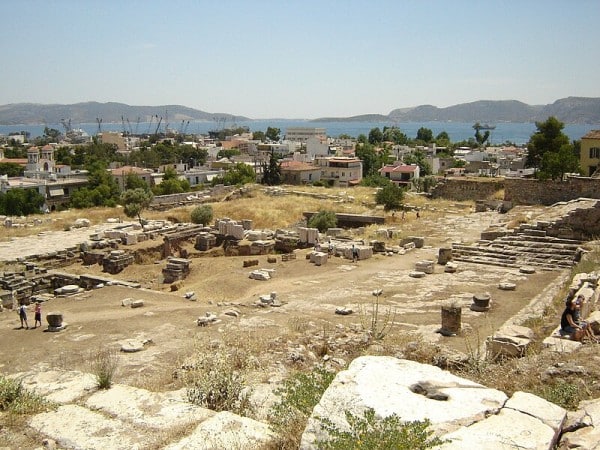
Other sources claim that the name Eleusis was derived from the hero Eleusis or Eleusinos. He was either the son of Hermes and Daeira, an oceanid, or Ogygus and Thebes. In other accounts, Eleusis is considered a female demi-goddess.
Eleusis, Demeter and Persephone
Eleusis is inextricably linked to a myth concerning the goddess of agriculture, Demeter. The source for this myth is one of the Homeric Hymns. The myth begins after Persephone has been abducted by Hades, possibly in some plains near Eleusis (it could be the Nysian plain in Boeotia).
Demeter then embarked on a quest to find and rescue Persephone. There are many myths regarding what Demeter did while she was searching for Persephone all around the world. A well-known myth depicts Demeter teaching Triptolemus the art of agriculture.
Demeter was hunting high and low, trying to find and rescue her daughter, when she came upon a well in Eleusis. There, she stumbled upon the four daughters of Celeus, who was the king of Eleusis, and queen Metaneira. They brought her to Celeus, who asked her to nurse his sons, Demophon and Triptolemus.
The goddess attempted to make Demophon immortal, but the ritual was cut short, probably because Metaneira interrupted it. However, she did manage to teach Triptolemus the gift of agriculture. Then, Triptolemus spread the knowledge of agriculture throughout Greece. To express gratitude to Demeter for this otherworldly gift, the Greeks decide to dedicate the Eleusinian Mysteries to her, one of the most sacred and exclusive religious initiations of Ancient Greece.
Eleusis in Ancient Greek History
Eleusis has historically been an important religious and historical center. The town, one of Ancient Attica’s demes and the location of the sacred Eleusinian Mysteries, was influential in Greece for many centuries.
The town of Eleusis
Eleusis belonged to the phyle Hippothoontes, the descendants of Hippothoon, a mythical king of Eleusis. Eleusis is located by the sea, on the exact opposite side of Salamis. The location of the city played a crucial role in its importance. Not only was it a coastal site, but it was also situated between Athens and Corinth.
Eleusis was not only a religious center due to the Eleusinian Mysteries but also an agricultural center. The plains around the city were extremely fertile, which contributed to its agricultural wealth. Finally, the city was famous as the birthplace of Aeschylus, the legendary tragic poet.
The Eleusinian Mysteries
The Eleusinian Mysteries were a yearly festival honoring Demeter and Persephone. Many scholars believe the festival originated in an ancient agrarian cult and was influenced by Mycenean religious practices.
The main theme of the Mysteries was the seasonal cycle as depicted in the myth of Persephone. The story was divided into three parts. First Persephone’s descent to the Underworld with Hades, then Demeter’s search for her. Finally Persephone’s return to Earth and reunion with her mother.
The Eleusinian Mysteries were divided into two types: the Lesser Mysteries, which took place in the early spring, and the Greater Mysteries, which occurred in the late summer. The Mysteries were highly secretive, which is why information about them is scarce.
During Peisistratos’ reign in the sixth century BC, the Eleusinian Mysteries became pan-Hellenic. A few centuries later, around 300 BC, the Greek state took control of the Mysteries, specifically two families: the Ceryces and, most importantly, the Eumolpidae. The number of initiates increased significantly, and slaves were now able to participate alongside Athenian men and women. The only requirements were that the initiate had not committed a murder and that they spoke Greek.
The Eleusinian Mysteries survived throughout the Roman period, up until the last pagan emperor of Rome, Julian. Julian was the final emperor to reintroduce the Eleusinian Mysteries and become initiated into them. Following Julian, Theodosius I, the first firmly anti-pagan Christian emperor, closed the Eleusinian Mysteries. According to historian Eunapius, the last Hierophantes (high priest) was a usurper who led a group of Christian monks to pillage the shrines. However, elements of Demeter’s cult persisted in the Greek countryside.
Exploring the Location: Eleusis
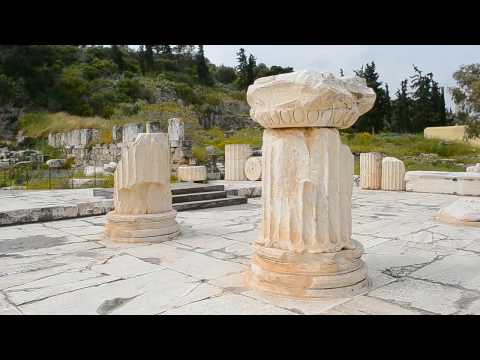
Eleusis’ archaeological site is well-maintained, despite the fact that the majority of the temple’s sites are ruins. Let’s check out the most important buildings that can still be explored.
Telesterion
The Telesterion, the most important structure in the Eleusinian complex, was the epicenter of the Eleusinian Mysteries. Its visible remains date primarily from the Classical period (5th century BC) and were designed by Ictinus, the Parthenon’s architect. However, the site’s history dates back to the Mycenaean period, with various phases of construction and renovation occurring over the centuries.
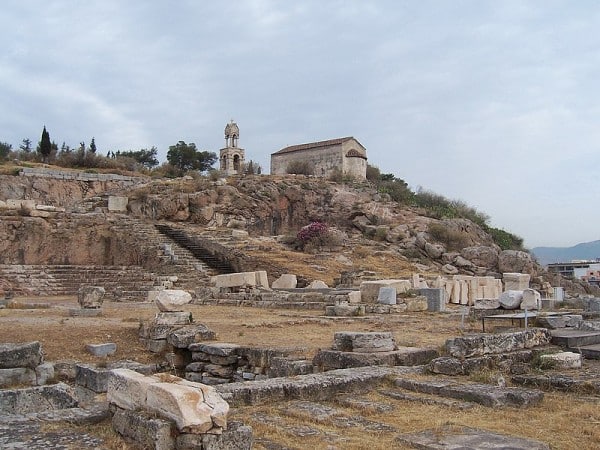
The Anactoron was a small rectangular chamber in the center of the Telesterion that housed the cult’s sacred objects. Only the Hierophant, the highest priest, could enter this area. During the Mysteries, the Hierophant would reveal these objects to the initiates, signaling the culmination of the rituals. The Telesterion was surrounded on three sides by the Sacred Court, where worshippers gathered to perform various rites.
Sacred Court
An open space on three sides of the Telesterion that was used for gatherings and rituals, as well as placement of altars and dedications.
Bouleuterion (Council House)
The Bouleuterion, located in the southeast corner of the Lycourgean enclosure within the south court of the Telesterion, most likely served as the Sacred Senate’s meeting place. In Roman times, it was replaced by a portico, and later by an odeon-like structure.
Kallichoron Well
A mythologically significant well where Demeter rested during her search for Persephone. Dating to the late 6th or early 5th century BC, it features a stone-lined interior, and two concentric mouth rings made of Eleusinian stone. The well was surrounded by a paved area and an apsidal wall, likely used for ritual purposes.
Roman Court (Square)
The sanctuary’s entrance is marked by a spacious 65m x 40m marble-paved courtyard. It was surrounded by monumental structures and served as the endpoint of the Sacred Way from Athens. The porticos, fountains, and triumphal arches were all constructed during the reigns of Hadrian, Antoninus Pius, and Marcus Aurelius.
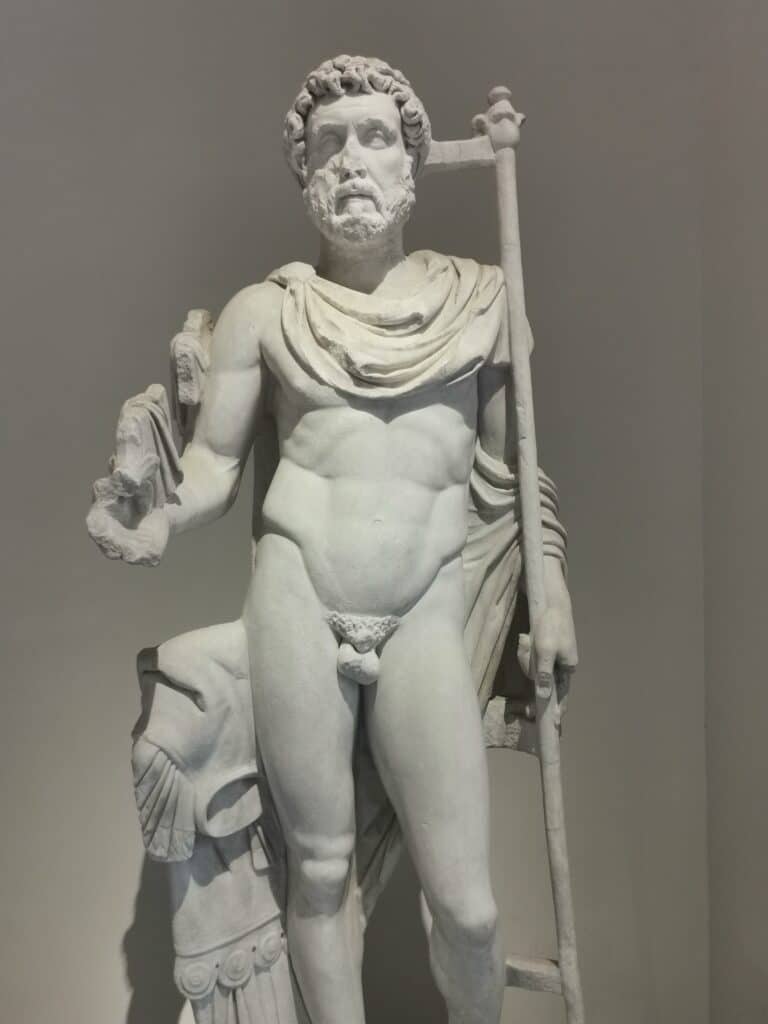
Temple of Artemis Propylaia and Father Poseidon
This temple, located centrally in the Roman Court, was built of pentelic marble with a wooden roof and ceramic tiles. Its design was closely modeled after the elegant temple of Athena Nike on the Athenian Acropolis, with columned porches and Doric monolithic columns at the front and back. Two altars dedicated to Artemis and Poseidon stood in front of the temple, with the remnants of a pedestal likely supporting a Poseidon statue to the north. This structure, dating from the second century AD, exemplifies the Roman emperors’ efforts to recreate Athenian architectural elements within the Eleusinian Sanctuary.
The Greater Propylaea and the Lesser Propylaea
The Greater Propylaea was an impressive Roman-era gateway to the Sanctuary, modeled after the Propylaea on the Acropolis. It had two colonnaded porches with Doric columns and a pediment depicting the emperor (probably Marcus Aurelius) in relief.
The Lesser Propylaea, on the other hand, was a massive gateway that served as the main entrance prior to the construction of the Greater Propylae. It was built in 54 BC and had two colonnaded porticoes with elaborate Corinthian capitals and Demeter-related decorative elements.
Ploutonion
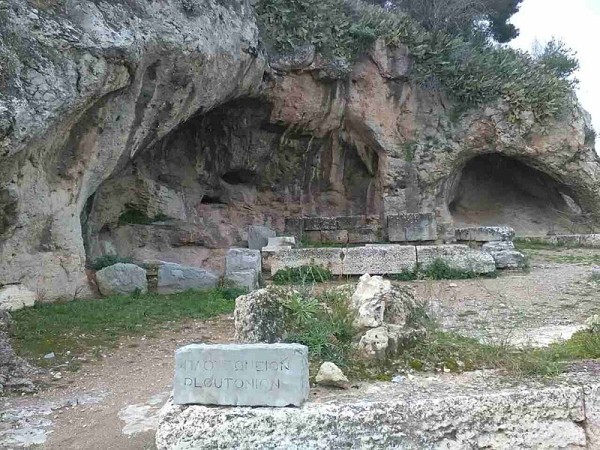
A sacred area at the northeast foot of the Eleusinian Acropolis hill, with two shallow caves and a small temple dedicated to Hadea. A triangular retaining wall bounded the area. Featuring a deep circular pit, possibly used for cult rituals.
House of the Ceryces (Heralds)
A Roman-era building used by the priestly family of the Ceryces. It comprised a large hall for sessions and three rooms, one of which contained wall paintings and religious artifacts.
Archaeological Museum of Eleusis
The museum is located inside the archaeological site. It houses exhibits found mostly on the site, after excavations.
Last Thoughts
While the modern, industrial city of Elefsina may not have much to offer in terms of attractions, it is worth a visit if you have time. Not only for the archaeological site and museum, which help visitors understand the significance of pagan mysteries, but also because Elefsina remains a cultural center. Between the end of August and the whole month of September, Elefsina hosts the Aeschylia Festival, the longest-running cultural event in modern Greece, which began in 1975.
FAQs about Eleusis
The Eleusinian Mysteries were religious rites performed with a vow of secrecy. They were dedicated to Demeter and Persephone.
Yes, but check for seasonal hours.
During spring or fall, but you can opt to visit at the end of August or during September, when the Aeschylia Festival takes place.
Featured Image Credit: Carole Raddato, Public domain, via Wikimedia Commons


,_center_for_the_Eleusinian_Mysteries,_Eleusis_(8191841684).jpg)

.jpg)