
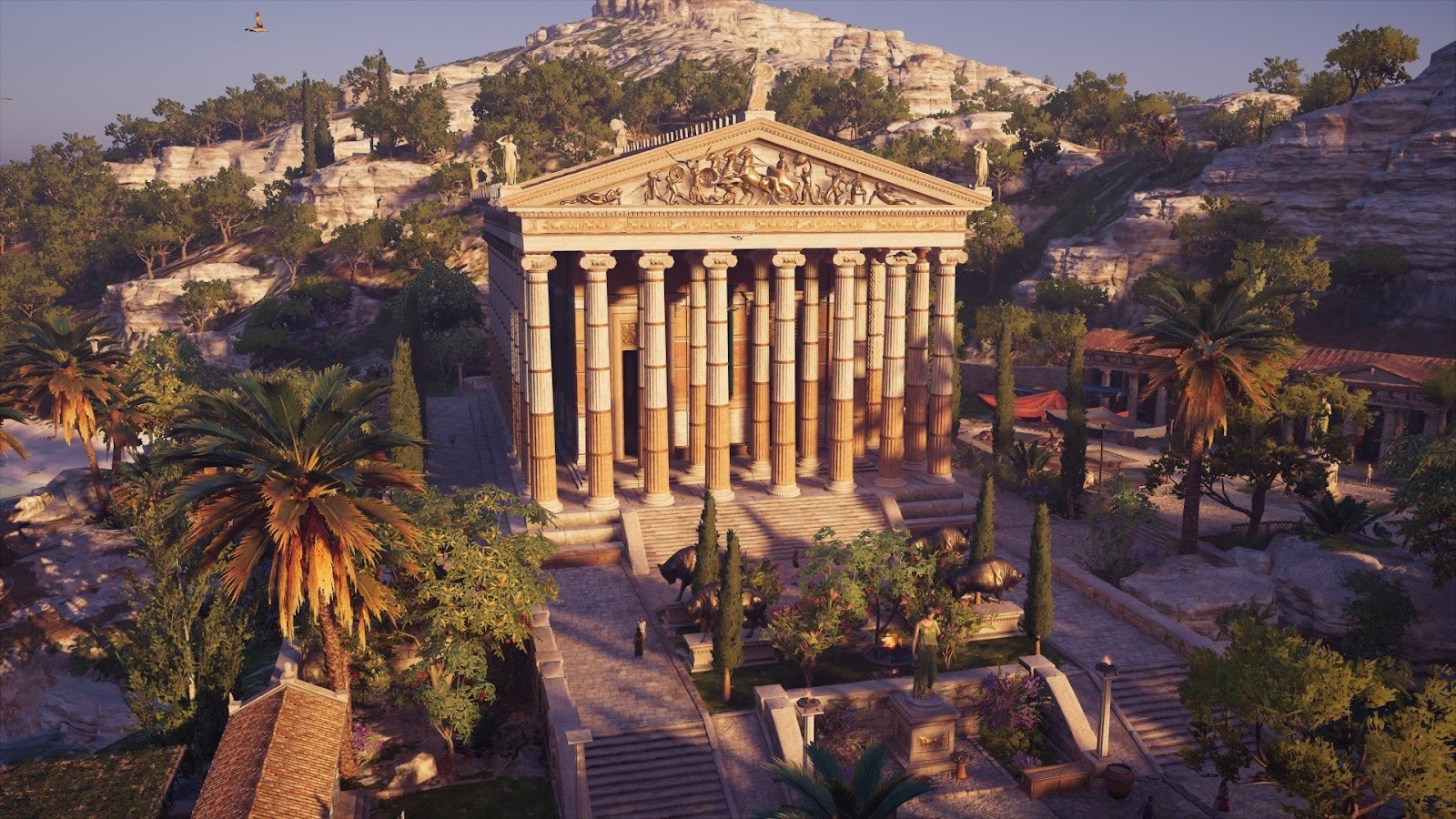
Religion in Ancient Greece was not a separate aspect of life but a constant presence woven into daily activities, social structures, and political decisions. From the household to the city-state, religious belief shaped how people understood the world, their place within it, and their relationship with the divine.
Pantheon
The Greek pantheon was composed of Olympian gods and goddesses who embodied natural forces, human emotions, and moral principles. Zeus, Hera, Athena, Apollo, Artemis, and others were not distant figures but active participants in human affairs, believed to influence fate, prosperity, and misfortune.
Worship was primarily practical rather than doctrinal. There was no sacred text comparable to later religious traditions; instead, belief was expressed through ritual, sacrifice, and communal festivals. Offerings of food, wine, and incense were made to honor the gods and maintain harmony between mortals and the divine.
Temples of Worship
Temples served as both religious and civic centers. While ordinary people rarely entered the inner sanctuaries, public rituals took place in open spaces, reinforcing collective identity and shared values. Major festivals such as the Panathenaia in Athens combined athletic competitions, processions, and sacrifices in honor of Athena.
Divination played a central role in decision-making. The Greeks believed that the gods communicated through signs, omens, and oracles. The Oracle of Delphi, dedicated to Apollo, was among the most respected institutions in the ancient world, consulted on matters ranging from personal dilemmas to matters of state.
Rather than seeking certainty, divination offered guidance and perspective. Signs were interpreted symbolically, encouraging reflection rather than blind obedience. This approach reveals a worldview in which fate (moira) and human choice coexisted, each influencing the course of life.
Everyday religion extended into the home. Household shrines honored deities such as Hestia, goddess of the hearth, emphasizing the sacred nature of family life. Simple rituals marked transitions such as birth, marriage, and death, reinforcing continuity between generations.
Study of Ancient Greece
Today, the study of ancient Greek religion offers insight into how symbolic systems and ritual practices have evolved over time. These traditions continue to inspire modern interpretations of spirituality and meaning, including those explored by a modern spiritual guidance platform, where ancient concepts of symbolism, intuition, and reflection are examined through a contemporary lens.
Understanding how the Greeks lived their beliefs reminds us that humanity has long sought connection, guidance, and purpose through ritual and symbol — a pursuit that remains deeply relevant today.
