
The biggest misconception about ancient Greece is thinking those folks just sat around debating philosophy all day. Greeks were obsessed with leisure time—and some of their favorite activities would shock anyone who pictures them as purely intellectual types, including gambling habits that would rival any modern real money casino.
Games of Chance and Dice
Daily life in Athens reveals something wild: these people were crazy about dice games. Walk through the agora around 3pm and you’d find clusters of men crouched over knucklebones (astragaloi) betting everything from coins to livestock to fancy pottery.
Five knucklebones per game. Highest combination takes the pot.
Pessoi was a grid-based strategy game where players moved pieces and placed bets on outcomes. This wasn’t underground activity. Sure, certain philosophers griped about it (Plato was against anything fun), but regular people didn’t care. Taverns set up dedicated gaming corners. Soldiers gambled between military campaigns.
Athletic Competitions Were Everywhere
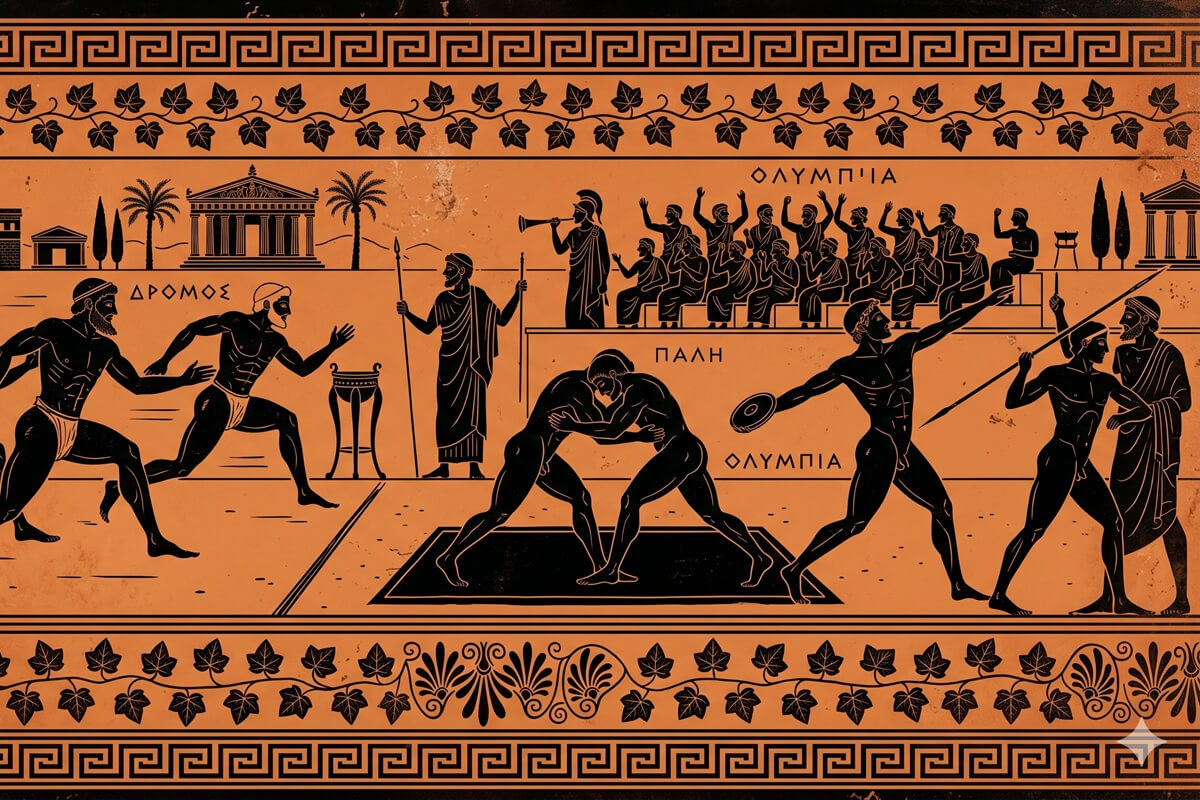
Everyone knows about the Olympics—started 776 BCE, happened every 4 years at Olympia. But athletic competitions saturated Greek culture constantly, not just during those famous intervals.
Literally everywhere. Local festivals featured races. Religious celebrations included wrestling matches. Every city-state organized its own games. The Pythian Games honored Apollo at Delphi. Isthmian Games near Corinth drew massive crowds. Nemean Games cycled through every 2 years. Greeks didn’t just spectate—young men dedicated hours daily to training at the gymnasium (which meant “place of nakedness” since they exercised completely nude).
Wrestling drew huge followings. The pentathlon combined running, jumping, discus throwing, javelin hurling, and wrestling into one exhausting event. Boxers wrapped leather straps around their hands and sometimes studded those wraps with metal pieces. Absolutely brutal.
Theater and Festivals
Greeks treated theater the way we binge streaming services now, except they experienced it communally instead of alone on couches. The Festival of Dionysus in Athens consumed 5 full days. Audiences sat through tragedies by playwrights like Sophocles and Euripides, then comedies from Aristophanes. Stone amphitheater seats from approximately 6am until sunset.
Competition was built in. Playwrights competed for prizes. Bad performances got booed off stage immediately—audiences didn’t hold back.
Symposia: Drinking Parties with Rules
Wine flowed constantly in Greek society, but they created this structured drinking party format called the symposium. Men reclined on couches (women weren’t typically invited), mixed wine with water in specific ratios, and spent hours conversing, singing, making music.
Even drinking had competitive elements. Kottabos required players to flick wine dregs at targets across the room. Winners received prizes. Losers drank additional rounds.
Music and Poetry
Greeks played lyres, flutes, and kitharas purely for personal enjoyment. They’d memorize epic poetry—all 15,693 lines of the Iliad if you really wanted to impress people—and recite passages at social gatherings. Basic education around age 7 or 8 included musical training as a core component.
Street musicians performed throughout marketplaces daily. Families sang together at home. Music permeated ordinary life in ways we’ve mostly lost now.
