
Ancient Greece is remembered for its philosophers, temples, and mythology, but its civilization was built on the hard work of ordinary people. Today, history enthusiasts can explore these fascinating aspects of the ancient world through educational resources online, much as people discover other forms of digital entertainment such as GameZone Casino.
Farmers, artisans, merchants, sailors, and religious officials all played vital roles in supporting their communities. Their occupations not only provided food and goods but also helped shape the economy and culture of the Greek city-states.
Work varied depending on a person’s social status, location, and skills. While many occupations were passed down through families, others required years of training or experience. Together, these professions formed the foundation of everyday life in Ancient Greece.
Farming: The Foundation of Greek Life
Farming was the primary occupation in Ancient Greece. In spite of the poor quality soils and rocky terrain of the region, farmers developed crops to support local settlements and trade.
The key crops included:
- Wheat and barley
- Olives
- Grapes
- Figs
- Beans and lentils
Olive trees were particularly important since they provide oil which was used for cooking, in lamps, in religious events, and in trade. Grapes were used to make wine which was an important product throughout the whole Mediterranean.
Family farms were the most common type of farming. In general, men performed planting and harvesting, while women were responsible for the processing of food and taking care of domestic tasks. Agriculture required constant work and was a key sector in the economy of Greece.
Craftsmen and Artisans
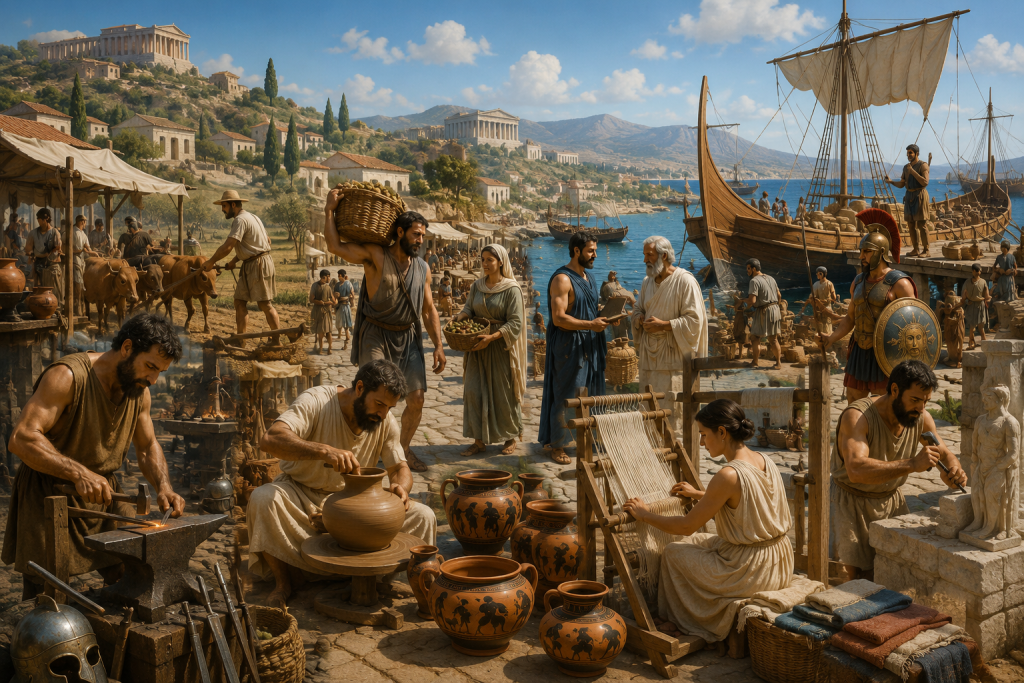
Skilled artisans, producing necessary items as well as ornamental products for the markets, played a critical role in society of ancient Greece. The names of their professions included:
- Potters
- Blacksmiths
- Carpenters
- Stone masons
- Sculptors
- Weavers
- Jewelers
Greek pottery gained popularity because of exquisite designs illustrating various myths and scenes from everyday life. Various sculptures dedicated to athletes, gods, and important politicians were made, and young people were discovering these crafts from their masters through years of apprenticeship.
Merchants and Traders
Trade was an important activity for the Greek city-states due to different physical features and availability of resources. Merchants traveled and exchanged goods by land and water. There were some common types of trade goods that were traded, like:
- Olive oil
- Wine
- Pottery
- Grain
- Timber
- Metals
- Textiles
Piraeus was one of the active ports connecting Greece with various parts of Egypt, Asia Minor, and other Mediterranean areas. Although trading brought wealth, there were also many dangers involved, such as storms and pirates.
Fishermen and Sailors
The sea had a significant part to play in Greek society. Fishing offered a vital food source whereas sailors moved cargo and persons between islands and shores.
Fishers used nets and hooks to catch fish such as tunas and sardines. For mariners, it was really important to be familiar with the changes in weather and rough sea.
Soldiers and Military Service
A number of Greek men balanced their civilian job with military duties. Likewise, farmers, craftsmen, and traders would serve their city-state if called to war.
In Sparta the situation was different. When Spartan men were not involved in combat training, other activities were connected with agriculture. In most city-states military service is one of the duties among many others.
Priests and Priestesses
Religion had an effect on almost every part of Greek society and gave rise to significant roles for priests and priestesses. Their function was to take care of the temples, to oversee sacrifices, to plan celebrations and to make sure religion was practiced properly.
But unlike in many later religious traditions, these positions did not have to be held for life. Some people took these roles on for a limited time, but in some cases these tasks were passed down through generations.
Teachers, Physicians, and Philosophers
Certain occupations were based more on intelligence than real labor. Teachers mentored kids in reading, writing, arithmetic, music, and physical education. Rich people often employed personal tutors while public education varied by city-states. Doctors cured patients by observing symptoms and experimenting with herbs.
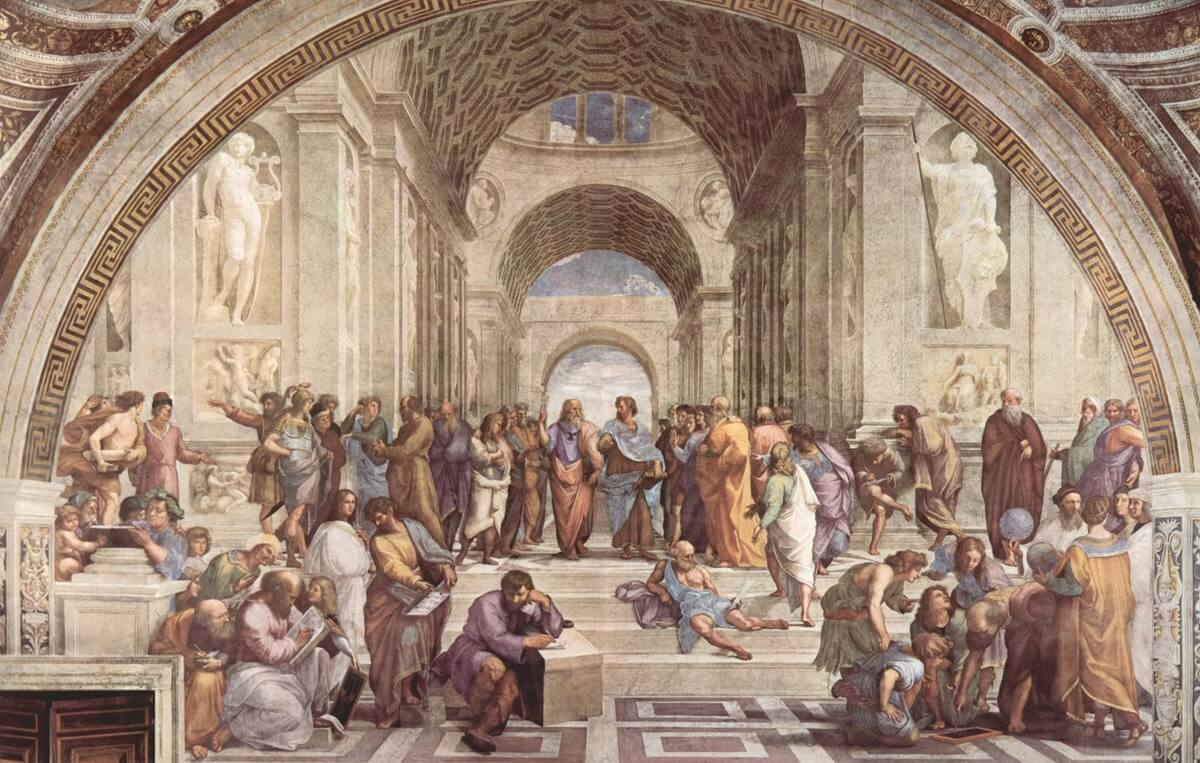
Greek physicians contributed to the medical field even if medicine at that time was stills developing. Philosophers like Socrates, Plato, and Aristotle devoted their lives to their inquiries about morality, politics, science and human nature. Their teachings attracted pupils from all over Greece and had a lasting impact on Western philosophy.
Women’s Work
Despite the differences of women’s duties across ancient Greece, they played a crucial role in household management and in the economy.
Women involved themselves in the following activities:
- Weaving cloth
- Making clothing
- Preparing meals
- Raising children
- Managing household supplies
Many women assisted in family firms or worked as priestesses in major religious temples. Despite their limited participation in public life, women contributed significantly to household maintenance and to the local economy.
The Role of Enslaved Workers
Enslaved individuals represented an essential element of the labor force in some Greek cities and towns. Their different activities took many forms, from household chores to skilled labor in workshops, agrarian activities, mining, and public construction projects.
Enslaved persons worked under varying conditions depending on the type of work performed. For instance, while some worked as tutors and skilled craftsmanship, others worked in intense conditions in the mines.
Featured image courtesy of Pexels.com
