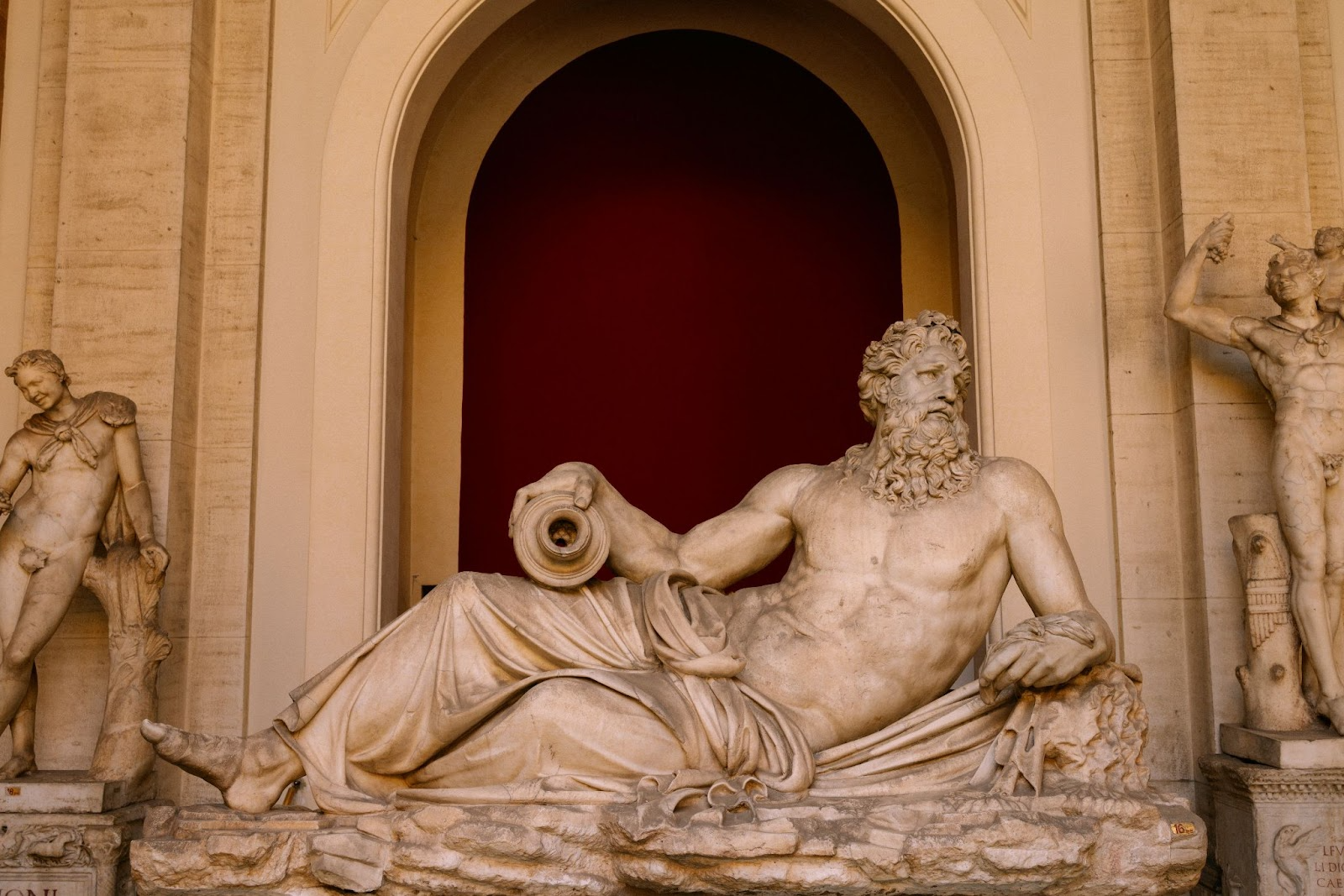
Ancient Greece is the cradle of human culture. That society died out a couple of millennia ago but its influence is still strong on contemporary Western lifestyle. That time’s mythology has molded our culture in several ways: from literature to art and from language to popular culture. Nowadays we can find many works of art, literature, cinema, business and entertainment which draw inspiration from Greek myths.
In this focus, we are about to describe the influence of Greek mythology on culture, advertising and entertainment. We will quickly analyse terminology, lexicon, characters, symbols and… slot machines. Games with Greek settings and themes are among the most popular on the web and are therefore available on each and every relevant online platform: check the list provided by Oddschecker to find out where to find them if you are curious about their settings and graphics, or simply eager to give them a go.
Ancient Greece in contemporary culture
When we speak about Greek mythology we refer to the wide collection of myths and legends originating from ancient Greece. These are tales that usually involve gods or goddesses, heroes, monsters and all sorts of mythical creatures. They were (and still are) largely used to explain natural phenomena and/or moral lessons.
Let’s think about typical English expressions like Achille’s heel; Herculean task or Pandora’s box. We all know what they mean and they all originate from Greek myths. These are only some examples but a lot of everyday English derives directly from Greek mythology. Moreover, it is possible to find traces of Greek myths in novels; theatre dramas and comedies; tv series; videogames and music. Understanding those times mythology helps us in appreciating the origins of many cultural references and provides valuable insight into how the beliefs and values of gone civilizations have shaped our world and continue to do so.
Mythology and advertising
Whoever aspires to give some flare and validation to a brand could refer to Greek mythology. A lot of very well-known brands already did that. Let’s just think about some power players. Nike is named after the Greek goddess of victory. The French fashion brand Hermès is another example: the founder was Thierry Hermès, who used his surname without changing it because he loved the natural association with the swift messenger of the Greek gods. And what about the Italian automotive brand, Maserati? Their well-known logo is a trident, just like the one Poseidon always brings with him to master the might of the sea.
Goodyear tires use the winged boot of Hermes in their logo, to convey speed and dependability; while their competitors, Hercules, are named after the god of strength, to show everyone how strong they are and how long they can endure. And then we have Versace. The maison used the face of Medusa, the Gorgon who turned her lovers and everyone who dared to watch her in the eyes into stone because of a curse, to make consumers fall in love with their creations.
The advertising industry owes a lot to ancient Greece and its undying mythology. The Olympian Gods continue to shape our conscience and attract our attention. Marketers know it too well.
The Titanomachy in games
The Titanomachy is the decade-long war that saw the Olympians triumph over the Titans and depose them from their power. Led by Zeus, the gods won their battles and kept their charm intact until our time. Popular videogames like God of War or Age of Mythology (the original and the Retold version) are so successful because of the influence Zeus and his companions have also today.
If we think about online casinos we find a long list of titles openly inspired by Greek mythology, such as Fire and Lightning; Rise of Olympus; Dawn of Olympus; Hot as Hades; Apollo God of the Sun and so on. This trend is common to the wider entertainment dimension. Netflix recently launched a series called Blood of Zeus, played in Ancient Greece, and another one titled Kaos, where ancient myths are translated to modern times. Mythological themes reflect narratives, histories and rooted cultural values which can help in shaping the design of visual worlds. Cultural nuances like these give life to rich and believable universes that enhance players’ and viewers’ immersion.
