
You draw a card at the kitchen table, and the face on it feels oddly familiar. Gold crowns, winged sandals, and laurel leaves show up in many decks, often without explanation. Those details can steer a reading, even before you fully remember which card you pulled.
For a quick check on the basics, TarotCards.io lists meanings for all seventy eight cards. That reference helps you separate what the card usually suggests from what your deck’s art implies. Once you have both, Greek myth becomes a clear extra lens, not a simple replacement.
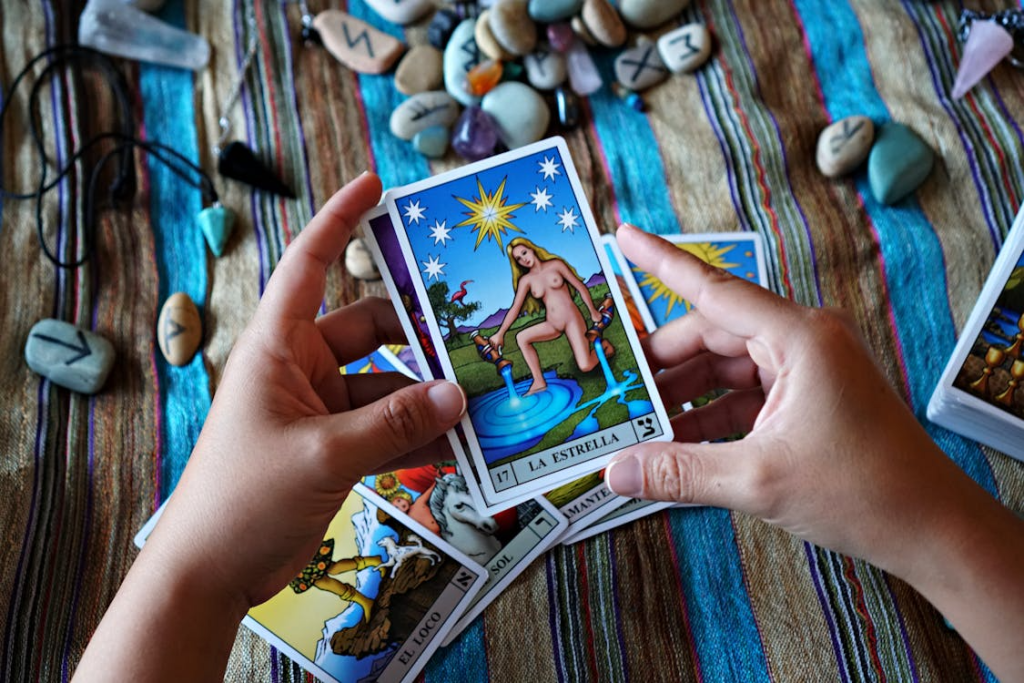
Photo by DΛVΞ GΛRCIΛ
Why Gods And Heroes Appear In Tarot Images
Tarot imagery grew alongside European painting, sculpture, and theater, which loved classical references and poses. Artists used gods as shared symbols because many viewers already knew their stories and attributes. A messenger figure can signal speed, trade, and travel, even when no name is printed.
Greek figures also fit tarot because both systems lean on character patterns and moral tension. Aphrodite can show human desire and attachment, while Athena can show planning and clear judgment. When you treat those as human themes, you avoid turning a reading into fortune telling.
A practical rule is to start with what the card shows, then add myth only if it clarifies. If a picture includes a trident, ask what the sea suggests in your question and context. Then, and only then, consider Poseidon’s moods, duties, and conflicts as a possible secondary clue.
Using Greek Myths With The Major Arcana
The Major Arcana deals with turning points, so deity themes often feel strongest in this set. Cards like The Emperor, The Lovers, and Temperance invite clear stories about power, choice, and balance. Greek myths offer many versions of those stories, with consequences that readers can understand and remember.
To keep the myth layer checkable, look for older sources instead of relying on modern summaries. The Perseus Digital Library at Tufts University provides Greek texts and translations for public reading. You can browse texts through the Perseus Digital Library site to check passages and names as needed.
Try pairing a card with a deity trait, then test it against the card’s standard function. If the link does not help the question, drop it and return to the card’s plain message. This approach keeps the reading honest, because your notes must earn their place every time.
Here are four pairings that often work, yet still leave room for the deck’s artwork. Use them as starting ideas, and rewrite them in your own words after a few readings. Each line includes a theme and a caution, so the symbol stays grounded in behavior.
- The Emperor can echo Zeus as authority, but it also warns against pride and unchecked control.
- The Lovers can echo Aphrodite and Eros, but it can warn about impulse and divided priorities.
- Strength can echo Heracles, but it points to patience, restraint, and steady courage under strain.
- Temperance can echo Iris, but it cautions against rushing what needs measured timing and care.
If a card image clashes with the myth, let the image win for that reading. Deck creators sometimes blend myths, so a single figure may carry several sources at once. Your job is to name what the picture shows, and connect it to the question asked.
Minor Arcana Links, Suits, And Daily Decisions
The Minor Arcana speaks through daily choices, so smaller spirits can fit without heavy theory. Naiads and dryads can align with Cups and Pentacles themes, tied to water and growth. You do not need perfect names, because the suit already provides structure and limits enough.
Swords often suit Athena’s clear mind, but they can also reflect conflict and sharp speech. Wands can match Apollo’s heat and drive, or Dionysus when joy tips into excess and risk. Pentacles often fit Demeter’s grain and work, while Cups can fit river spirits and tides.
When you map myth to suits, keep it small, and focus on actions you can take soon. Ask what the card suggests for the next week, not for the rest of your life. That time frame keeps symbolism helpful, rather than turning it into trivia or drama too often.
A simple practice is to choose one deity for each suit, then write two traits and one warning. After ten readings, review your notes and see which pairings felt clear and repeatable later. Refine the list until it supports your questions, instead of competing with them at all.
Keeping Deity Readings Verifiable And Respectful
Myths shift across poets and regions, so a reading improves when you show your steps. Write the card name, the position, and a short description of what you literally see. Then add one myth note, and explain why it connects to the question at hand.
It also helps to know that tarot began as a card game, before later esoteric systems formed. The Library of Congress has a public record for A E Waite’s The Illustrated Key to the Tarot. That record shows how early twentieth century writers framed meanings that still influence many decks today. When you read for someone else, keep your language careful and avoid claims of certainty. Say what the card suggests, then offer options, rather than giving a fixed answer plainly.
If a deity image triggers fear or strong attachment, pause and check for sudden projection. Ask whether you are reacting to a story you know, or to facts in the person’s situation. A slower pace often produces clearer guidance, because it leaves room for nuance and context.
Putting Deity Imagery To Work In A Spread
Use a small spread, like three cards, so symbols stay manageable and notes remain readable. Name any deity traits you notice, then tie each trait to a concrete decision point. If no myth link appears, stay with the card’s standard meaning and the image details.
For a yes or no style question, deity traits can refine how you phrase the next step. Hermes traits can suggest a call, a message, or a short trip to gather needed facts. Athena traits can suggest careful planning, clear documentation, and a calm conversation before any action begins.
The practical takeaway is simple, treat myth as a reference shelf, not as a script. Check the card basics, compare the artwork, and keep your notes tied to real choices. Deity symbols can add depth, as long as they stay in service of clarity and care.
