
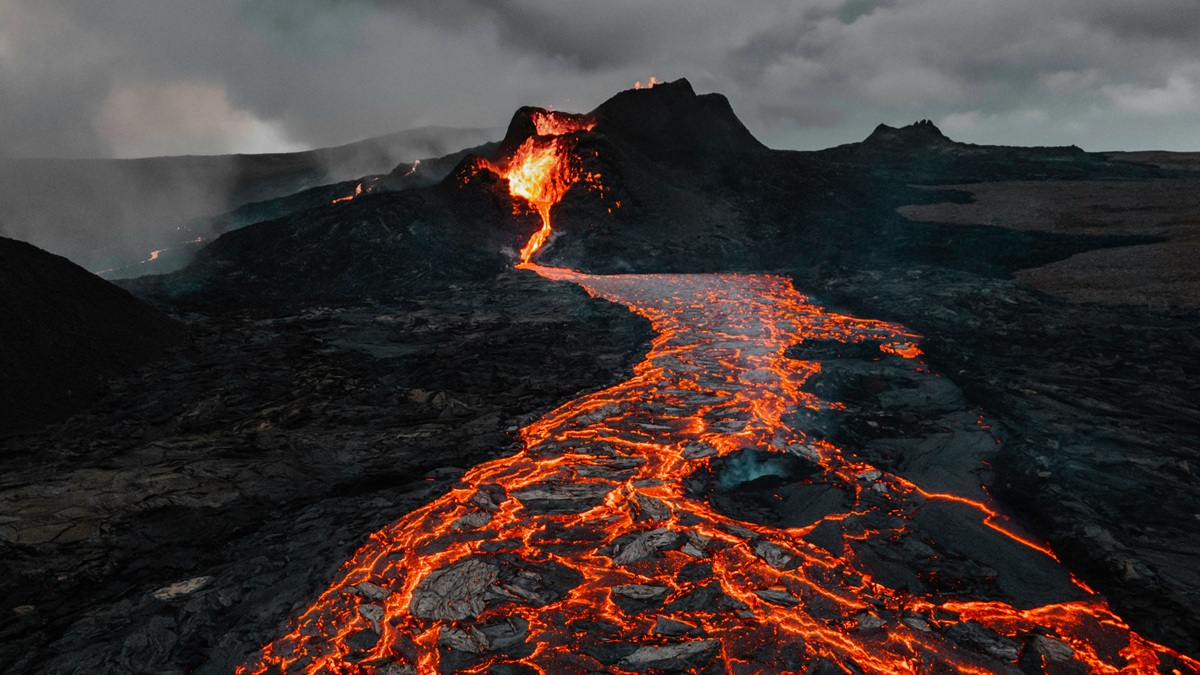
Imagine standing at the foot of Mount Etna or Vesuvius three thousand years ago. You aren’t looking at a geological pressure valve; you’re looking at a chimney. For the ancient Greeks, the smoke and thunder pouring out of the earth was the most visible evidence that the gods were real, busy, and occasionally very angry. They didn’t see a random natural disaster—they saw a celestial factory where the weapons of the gods were forged in the white-hot heat of the deep earth.
This wasn’t just superstition; it was a way to categorize the terrifying power of nature. While we now understand magma and tectonic plates, the ancients understood the concept of “work.” To them, a mountain that shook and glowed at night was clearly a place of industry. It was a divine smithy where the raw materials of the universe were hammered into shape by a master craftsman.
There is a specific kind of electricity that comes from not knowing exactly what is over the next horizon, but having the guts to sail toward it anyway. When you feel like chasing the thrill of chance and the unknown, you can visit Spin City casino to find the heart-thumping thrill of what might be.
The Divine Engineer of the Forge
At the center of it all was Hephaestus, the god of fire, metalworking, and masonry. He was unique among the Olympians because he was the only god who actually worked for a living. While Ares was out fighting and Apollo was playing his lyre, Hephaestus was at his anvil, covered in soot and sweat. He was the divine engineer who transformed the terrifying power of lava into something useful and beautiful.
When the Romans later adopted these stories, they called him Vulcan. This name is where we get our modern word “volcano,” and it captures the more explosive, destructive side of the god’s personality. Whether you called him Hephaestus or Vulcan, the sound of a mountain rumbling was interpreted as the strike of his massive hammer. It was a sign that the “God of the Forge” was working on a high-stakes project for the king of the gods.
The Outcast in the Volcano
Hephaestus wasn’t always the master of the mountain. Legend says he was born “imperfect” and cast off Mount Olympus by his own mother, Hera, who was disappointed by his appearance. He plummeted for an entire day before crashing into the sea. He was eventually taken in by the spirits of the deep, but his true home became the volcanic islands of the Mediterranean, like Lemnos and Sicily.
By setting up his workshop inside these mountains, he took the very thing that made him an outcast—his raw, fiery intensity—and turned it into his greatest strength. He realized that the heat of the earth was far superior to any fire he could build on the surface. Within the belly of a volcano, he crafted the most legendary items in mythology:
- The Thunderbolts of Zeus: The ultimate weapon of the sky.
- The Armor of Achilles: Which made the hero nearly invincible in the Trojan War.
- The Aegis: A terrifying shield used by Athena and Zeus.
- The Chariot of Helios: The golden vessel that carried the sun across the sky.
The Monster Under the Mountain
The Greeks also used volcanoes to explain where the “bad guys” went after the gods won the war for the universe. Before the Olympians ruled, there were the Titans and the even more terrifying Typhon, a multi-headed monster so huge his head brushed the stars. When Zeus finally defeated Typhon, he didn’t just kill him; he trapped him under Mount Etna to keep him from ever rising again.
The lava we see today was described as the monster’s lingering breath, and the tremors were his desperate attempts to shake off the weight of the earth’s crust. As the poet Pindar famously wrote of the beast trapped beneath the volcano:
“He is fast bound by a pillar of the sky, even by snowy Etna, nursing the whole year’s length her dazzling spear of frost; from whose depths are vomited the purest founts of unapproachable fire.”
This created a fascinating dual nature for volcanoes. On one hand, you had the orderly, creative fire of Hephaestus—the “good” heat that creates tools and civilization. On the other hand, you had the chaotic, destructive fire of Typhon—the “bad” heat that destroys everything it touches. A volcanic eruption was a literal battle between these two forces: the god trying to keep the lid on the forge, and the monster trying to blow it off.
Photo by Tetiana GRY on Unsplash
