
Long before the first silicon chip was ever polished, the ancient Greeks were already dreaming of artificial intelligence. While we often think of “robots” as a product of the 20th century, the myths of the Mediterranean suggest that the ancients were obsessed with the idea of the “living machine.” These weren’t just clockwork toys; they were entities that occupied a strange, blurred line between cold metal and sentient spirit.
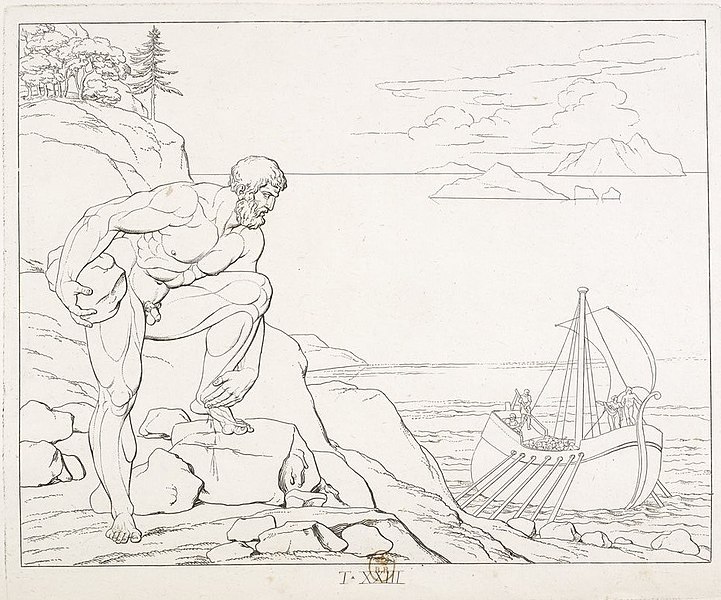
The most famous of these mechanical wonders was encountered by Jason and the Argonauts. As their ship, the Argo, approached the shores of Crete, they were met not by an army, but by a single, towering figure made entirely of burnished bronze. This was Talos, the world’s first mythical robot.
There is a specific kind of electricity that comes from not knowing exactly what is over the next horizon, but having the guts to sail toward it anyway. Today, we call that “chasing a thrill” or seeking adventure, and it is the same heart-thumping energy that drove the explorers and warriors of old. We are all about helping you find that raw, untamed connection to the past over at Slotoro Casino. If you are ready to trade the comfort of the routine for the thrill of what might be, you should visit.
Talos: The Sentinel of Crete
Talos was a gift from the forge-god Hephaestus to King Minos. His directive was simple: protect the island. According to the legends, Talos would march around the entire perimeter of Crete three times a day. If he spotted an intruder, he didn’t just fire arrows; he would heat his bronze body to a glowing red and embrace his enemies in a lethal, searing hug.
What makes Talos fascinating to modern eyes is his “operating system.” He wasn’t powered by a soul, but by Ichor—the golden blood of the gods. This divine fluid ran through a single vein that stretched from his neck down to his ankle, held in place by a single bronze nail or “bolt.” He was a closed-loop system, a masterpiece of biological engineering that mimicked life so perfectly it became indistinguishable from it.
The Greeks saw Talos as the ultimate guardian—a soldier that never slept, never ate, and never felt pity. However, his story also highlights the “glitch” in the machine. During the encounter with the Argonauts, the sorceress Medea didn’t defeat him with a sword; she used “malware.” She hypnotized the giant, convincing him to remove the bolt in his ankle. As the Ichor drained out like oil from a broken engine, the bronze titan collapsed, proving that even a god-built machine has a single point of failure.
Hephaestus and the Maidens of Gold
Talos wasn’t the only “automaton” in the Greek toolbox. If you looked inside the workshop of Hephaestus, you would find his personal assistants: a group of Golden Maidens. These were lifelike statues made of solid gold that moved, spoke, and—most importantly—learned.
The poet Homer describes them in the Iliad as having “understanding in their hearts, and voice and strength.” This is perhaps the earliest description of what we now call Artificial General Intelligence (AGI). They weren’t just programmed for one task; they possessed nous (mind) and could anticipate their master’s needs.
The Greeks used these stories to explore a profound philosophical question: If a machine can think, speak, and feel, does it have a soul? By placing these “intelligent machines” in the hands of a god, the Greeks acknowledged that creating life was a divine act, but by making them out of metal, they suggested that intelligence is something that can be engineered, analyzed, and even improved upon.
The Thrill of the “Living” Earth
Standing on the rugged, sun-bleached coast of Crete, it’s easy to look out at the horizon and imagine the glint of bronze moving along the cliffs. There is a heart-thumping clarity in standing where the ancient world’s most advanced dreams were born—a victory of imagination over the limitations of the era. That rush of witnessing something that shouldn’t be possible is a thrill that hasn’t aged a day. We’re all about chasing that specific, high-stakes energy, helping you step out of the ordinary and into the shoes of those who dared to hold back the tide of empires. If you’re ready to trade the safety of the sidelines for the raw, legendary thrill of your own “victory” and stand where the masters of the ancient world once defied the horizon, come see where the impossible became reality.
This ancient fascination with “living statues” eventually spilled over into real-world technology. By the Hellenistic period, inventors like Hero of Alexandria were creating real, steam-powered automatons and programmable theater curtains. The myth of Talos wasn’t just a fantasy; it was a North Star for Greek engineers, a goal to be reached through the study of pneumatics and mechanics.
What the Automatons Tell Us Today
The Greek view of intelligent machines was surprisingly nuanced. Unlike many modern sci-fi stories where the robots immediately turn on their creators, the Greek automatons were seen as tools of order. They were the “ideal” servants because they lacked the messy, unpredictable emotions of humans. They represented the peak of Techne—the Greek word for craft and artifice.
However, the tragedy of Talos always served as a warning. The “bronze nail” in his ankle was a reminder that even the most perfect machine is fragile. To the Greeks, the line between the natural and the artificial was a thin veil, easily pierced. They understood that while we can build a body of bronze and a mind of gold, the “Ichor” that makes it run is a gift from the gods—something that can be drained away in an instant.
Chasing the echoes of these myths takes you beyond the museum glass and into the heart of human curiosity. It’s about more than just old stories; it’s about the eternal human drive to build, to create, and to stand in awe of the things we’ve made. Whether you are exploring the ruins of a Cretan palace or looking into the future of technology, the spirit of Talos is still there, guarding the boundary between what we are and what we might become.
