

Gambling and games of chance have accompanied humanity for thousands of years, reflecting cultural values, ideas about fate, and attitudes toward risk. In Ancient Greece, they were an integral part of public life: in between battles or during festivals, Greeks eagerly threw dice, played various board games, and placed bets on athletic competitions. These entertainments not only served as a form of leisure but also strengthened social bonds.
Today, centuries later, gambling has moved into the digital space. Online casinos, poker platforms, and virtual slots have become modern counterparts of ancient games, while preserving the main essence — testing one’s luck and seeking emotional excitement. Let’s look at how forms of gambling have changed from antiquity to the internet age, and what cultural parallels can be drawn between them.
Games of chance in Ancient Greece
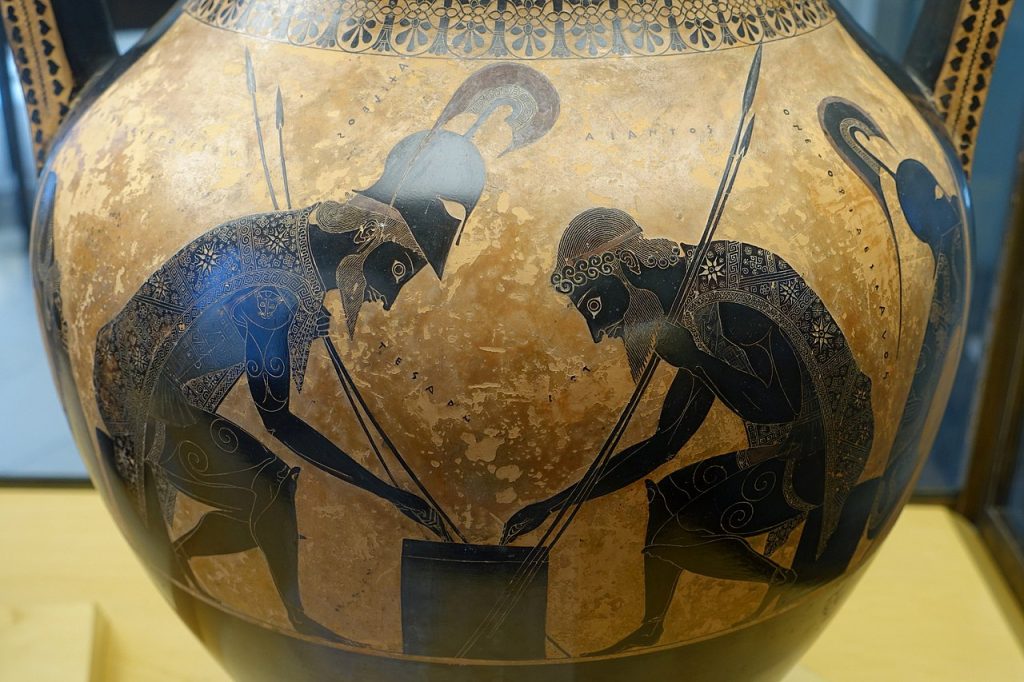
In ancient culture, games of chance were closely intertwined with religion, festivals, and military life. One of the most popular entertainments was the dice game “astragaloi,” made from animal knucklebones. These dice were used both for gambling and for divination, reflecting the Greeks’ belief in fate and the gods’ intervention in the outcome of events. Sporting competitions such as the Olympic Games also involved betting: spectators would predict winners, and large payouts brought not only money but also prestige.
In some cases, gambling was seen as a way to earn the blessing of the goddess Tyche, the patroness of fortune. Overall, ancient Greek gambling entertainment was not merely a way to pass the time — it was part of a cultural ritual.
From Ancient Habits to Modern Life
If in ancient times gambling was tied to specific places — the agora, taverns, or arenas — today you can test your luck anywhere in the world with internet access. Modern online platforms such as Ricky Casino offer dozens of types of games: from classic card games to the latest 3D video slots. Unlike ancient times, where games were accompanied by personal contact and live spectacle, online casinos recreate the atmosphere through live dealers, chat rooms, and bonus systems.
However, the core remains the same: players strive to feel the thrill, take a risk, and win. This transition from physical venues to virtual space demonstrates how technology changes the form of entertainment while preserving its psychological basis.
Religious and Mythological Motifs in Gambling
In Ancient Greece, gambling was linked to religion. The gods of Olympus were often depicted in myths as participants in competitions or games in which the fate of the world was decided. For example, Zeus, Apollo, or Athena could grant victory or luck to chosen mortals.
Interestingly, the pantheon known as the Twelve Olympians included both gods of war and wisdom, and patrons of joy and pleasure. Modern casinos often use these images in marketing: slot machines with mythological themes, symbols of Zeus’s lightning bolt or Poseidon’s trident create an atmosphere of “divine” intervention in the outcome of the game. In this way, mythology continues to live on in a new form, inspiring players and fueling their interest in gambling.
The Social Function of Chance Then and Now
In ancient times, gambling was not only entertainment but also a way to establish social connections. Playing at the same table or participating in sports betting brought people of different classes together, creating a sense of equality before fate. Today, online casinos and gaming communities perform a similar function: forums, chats, and tournaments unite players from around the world.
In both cases, gambling becomes a kind of “social glue,” allowing people to share emotions, experiences, and strategies. The difference is that modern technology has erased geographical boundaries, making gambling a global phenomenon.
The Evolution of the Perception of Luck and Risk
The ancient Greeks saw luck as the will of the gods or the result of their favor. Risk was part of life, especially for warriors and athletes. Today, luck is still perceived as an important factor, but the element of control comes to the forefront — betting strategies, mathematical calculations, and bankroll management. Online casinos provide players with statistics, bonuses, and demo versions of games, allowing them to approach the process more consciously.
Nevertheless, as thousands of years ago, the outcome remains unpredictable, and at the heart of gambling always lies the desire to test one’s fate.
Parting thoughts
The path from ancient Greek gambling games to modern online casinos is a story of adapting the same human need to the conditions of the time. Forms, technologies, and scales have changed, but the attraction to risk, the desire to test luck, and the emotions of victory remain unchanged. In this sense, a modern player spinning the reels of a virtual slot machine and an ancient Greek throwing astragaloi in a noisy tavern share the same passion. Gambling, as thousands of years ago, continues to be part of human nature, linking the past and the present.
